India’s digital advertising market is projected to cross ₹2.01 lakh crore in 2026, with digital channels now accounting for 68.1% of total ad spend, according to WPP Media’s TYNY report. More brands are spending more money online than ever before, and more of them are getting it wrong by hiring the wrong partner to spend it with.
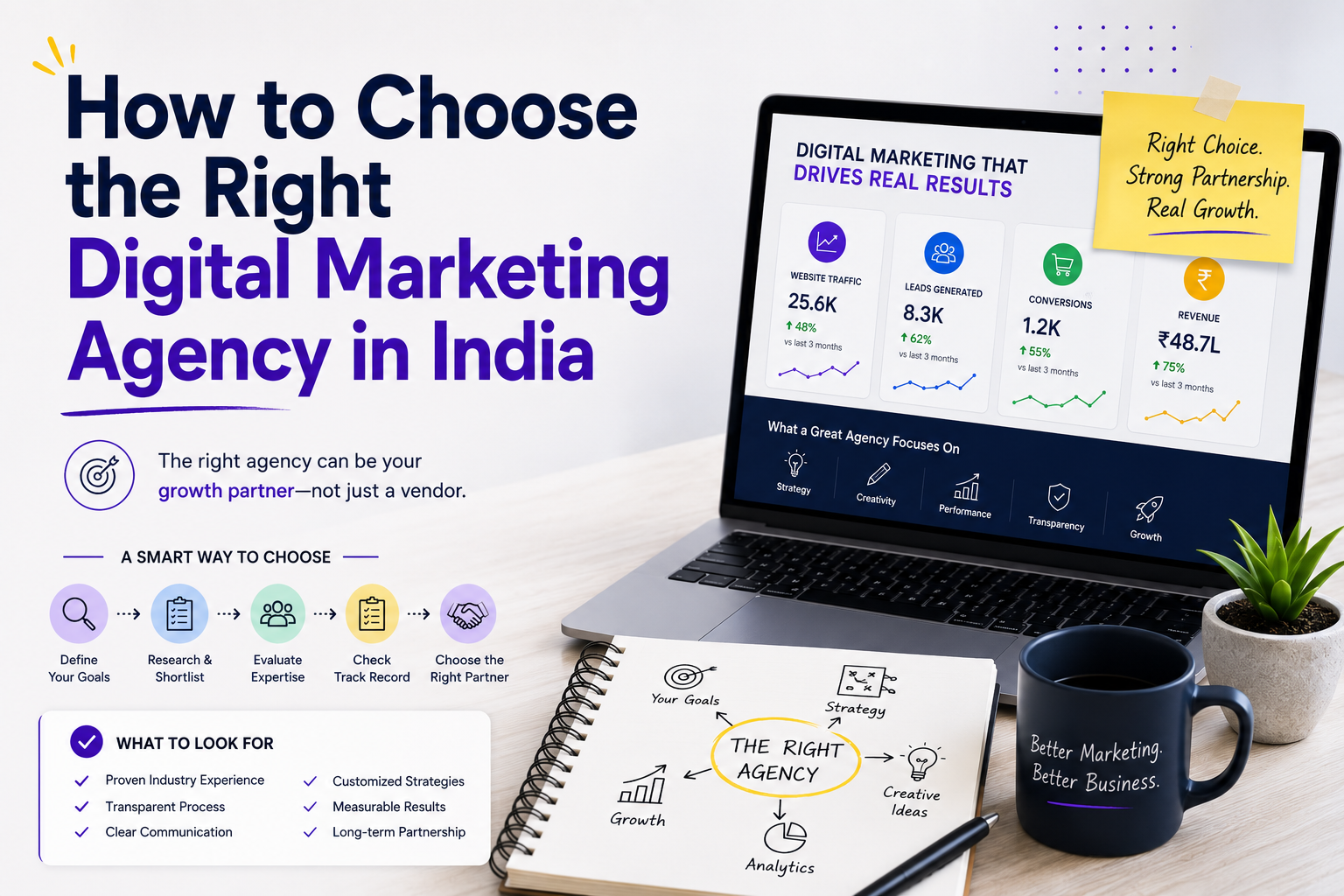
Choosing a digital marketing agency in India is no longer a simple vendor decision. It’s a growth decision. The right agency becomes an extension of your business, one that understands your customer, protects your budget, and compounds results month after month. The wrong one burns three to six months of runway on vanity metrics, generic strategy decks, and reports you can’t act on.
This guide walks you through exactly how to evaluate, shortlist, and select a digital marketing agency in India, whether you’re a founder building a brand from scratch, a CMO consolidating vendors, or a marketing manager tasked with finding a partner who can actually move revenue.
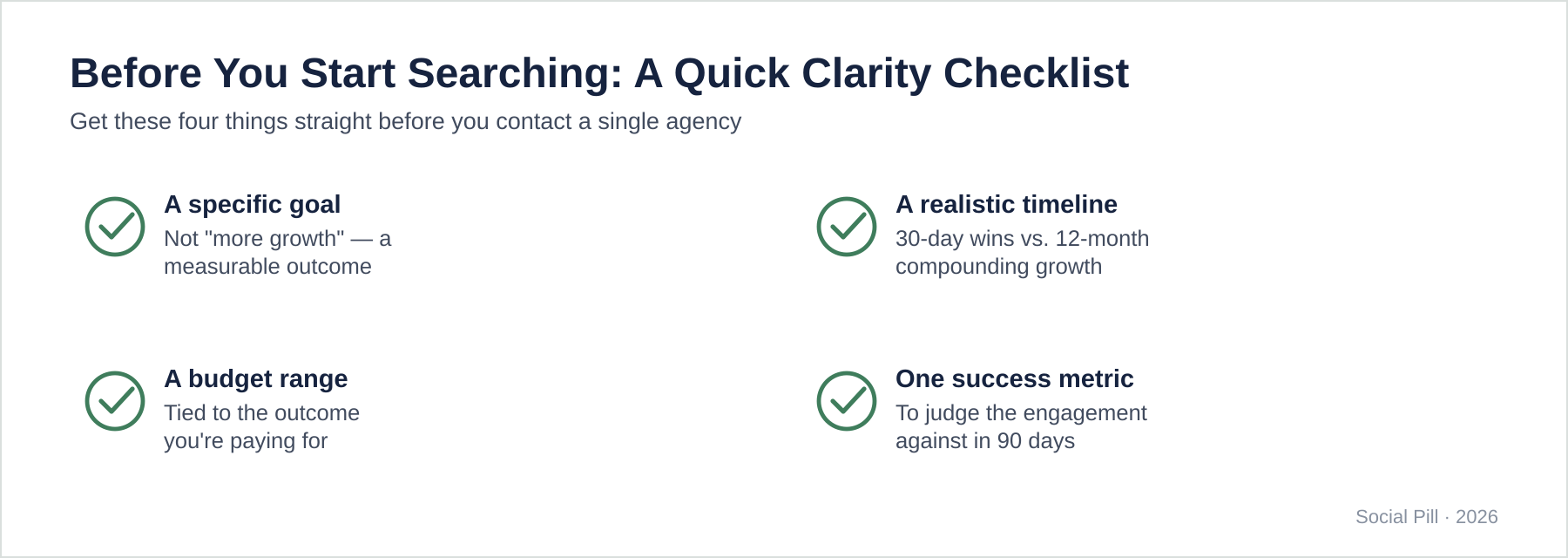
Identify Your Needs, Goals, and Budget
Before you contact a single agency, get precise about what you’re trying to solve. “We want more visibility” is not a brief; it’s a feeling. A brief sounds more like “we need 40% more qualified leads from organic search in six months” or “we’re launching in three new cities and need paid media to carry the weight until SEO builds up.”
Short-Term Wins vs. Long-Term Compounding
Start by separating your goals into two buckets: what you need right now, and what you’re building for the next 12–24 months.
- Need leads within 30 days? Performance marketing and paid social will carry you faster than SEO ever can.
- Building a durable, lower-cost acquisition engine? SEO and content marketing are the foundation, but they take quarters, not weeks, to compound.
Confusing these two timelines is one of the most common reasons brands feel let down by an agency that was, technically, doing exactly what was asked of it.
Set a Budget Tied to Outcomes
Your budget should be tied to outcomes, not to what feels affordable. A small, single-channel retainer will not deliver enterprise-grade SEO or a six-figure ad budget’s worth of performance marketing and an agency that promises otherwise is telling you what you want to hear, not what’s realistic. Once you know your objective, timeline, and budget band, you’re ready to build a shortlist instead of a wishlist and to make sure that spend doesn’t just drive traffic, but helps you turn that traffic into paying customers.
Agency vs Freelancer vs In-House: What’s Right for You
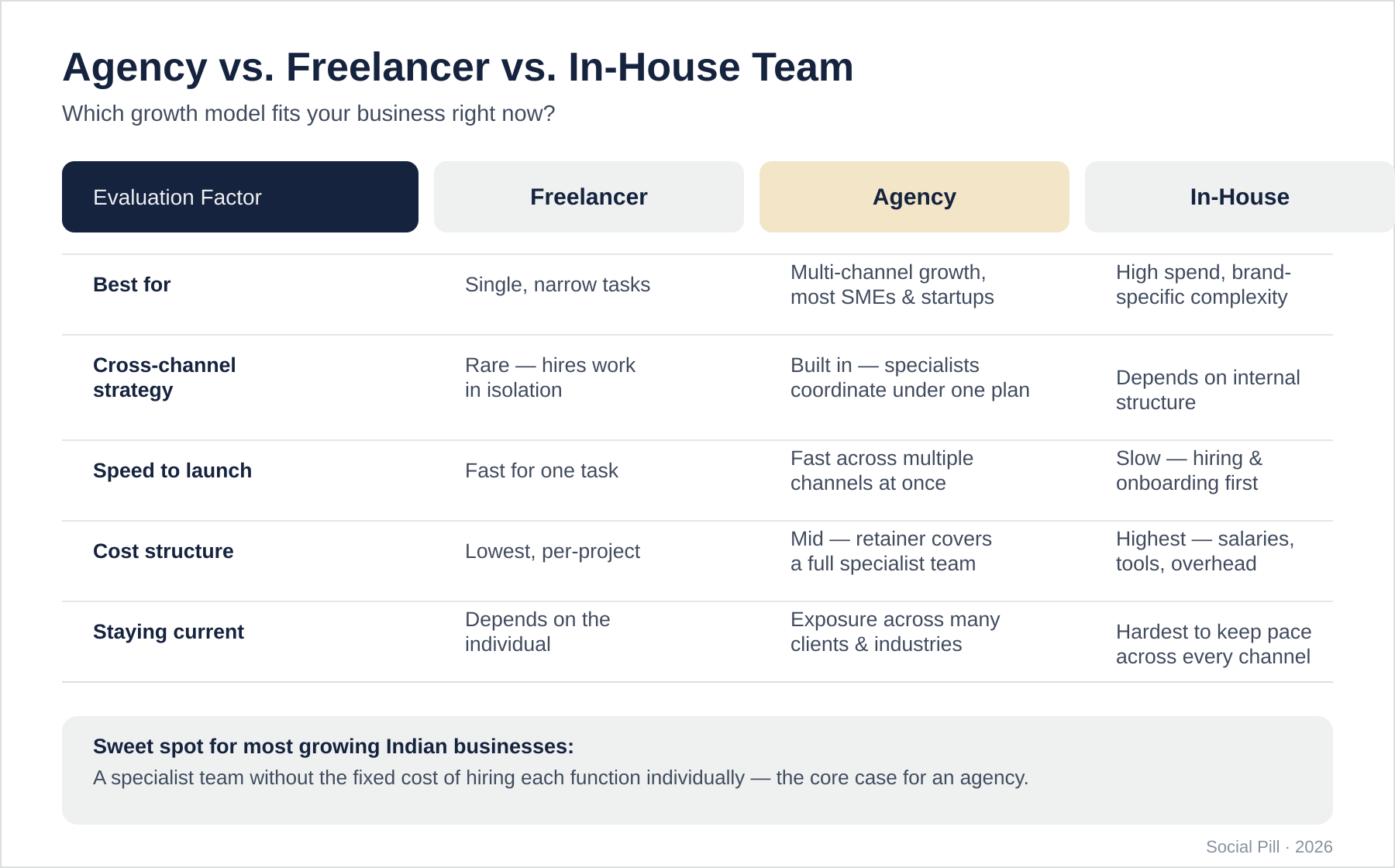
Not every business needs a full-service agency on day one. Understanding the trade-offs between hiring an agency, working with freelancers, or building an in-house team will save you from a costly mismatch.
When a Freelancer Makes Sense
Freelancers work well for very small businesses with a single, narrow need: a one-off website build, a short content sprint, or a small ad account with limited monthly spend. They’re typically less expensive, but you lose the benefit of cross-functional strategy: your SEO freelancer won’t necessarily talk to your ads freelancer, and nobody owns the overall growth outcome.
When an In-House Team Makes Sense
An in-house team makes sense once marketing becomes a core, ongoing function of the business, or when brand and product knowledge is so specific that outsourcing creates friction. The trade-off is cost: salaries, tools, training, and management overhead add up fast, and it’s genuinely difficult for an internal team to stay current with algorithm changes and new formats across every channel simultaneously.
When an Agency Makes the Most Sense
For most growing Indian businesses from Series A startups to established SMEs and D2C brands, an agency hits the sweet spot. You get a team of specialists (SEO, paid media, content, design, analytics) without the fixed cost of hiring each of them individually, and you get exposure to patterns learned across dozens of other clients and industries.
Industry Experience: Why It Matters More Than Agency Size
The size of a team or the number of years an agency has existed tells you less than you’d think. What actually predicts results is whether the agency has solved problems specific to your industry before. A healthcare brand has compliance and trust considerations that a fashion D2C brand never encounters. A B2B SaaS company converts through long sales cycles and content-led trust-building, not impulse-driven ad creative.
The Question That Cuts Through Most Pitches
Ask directly: “Have you worked with brands in our category before, and what did results look like?” An agency with relevant experience will already understand your customer’s buying triggers, your competitors’ playbooks, and the regulatory or platform-specific nuances of your sector which shortens the learning curve significantly.
That said, don’t automatically rule out a newer or smaller agency without a client in your exact category. Some of the best work comes from teams hungry to prove themselves, provided their strategic thinking, tools, and process are sound. Ask them to walk you through how they’d approach your specific problem the quality of that reasoning tells you more than a logo wall ever will, especially when it comes to a strong content marketing strategy built for your category.
Evaluating Track Record: Case Studies, Reviews, and Reference Calls
Anyone can claim results. Very few can prove them with numbers that map to revenue, not just traffic. When you review case studies, look past screenshots of rising graphs and ask what specifically improved:
- Cost per lead
- Conversion rate
- Return on ad spend (ROAS)
- Organic revenue share
Traffic and impressions are the easiest metrics to manufacture; revenue impact is not.
Don’t Skip the Reference Call
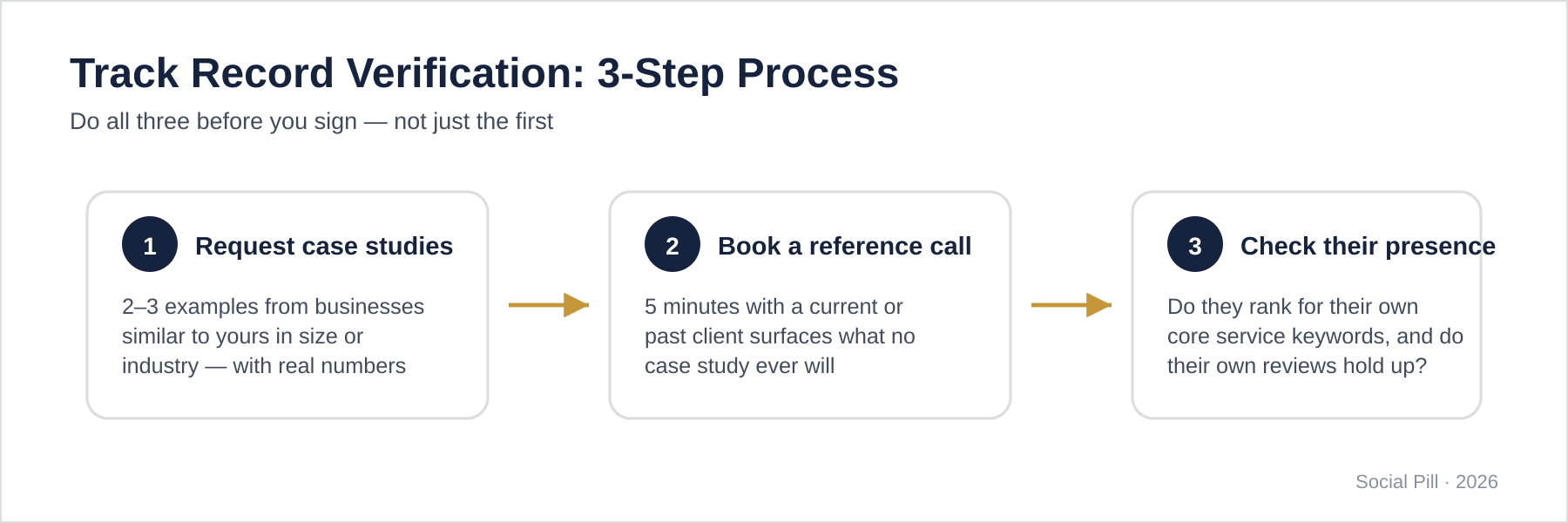
Ask for two or three case studies from businesses similar to yours in size, industry, or growth stage not just their flashiest client. Then go one step further and ask for a reference call with a current or recent client. This single step is skipped by most businesses and regretted by almost none who do it. A five-minute call with a past client will surface things no case study or pitch deck ever will responsiveness, how they handle underperformance, and whether the relationship felt like a partnership or a transaction.
The Credibility Filter
There’s also a simple credibility filter worth applying before you even pick up the phone: check whether the agency’s own website, Google Business reviews, and organic visibility reflect the expertise they’re selling you. An SEO agency that doesn’t rank for its own core service keywords in its own city is a meaningful signal.
Team Expertise and Who Will Actually Work on Your Account
A polished pitch is often delivered by the agency’s most senior, most persuasive people who may not be the ones actually running your campaigns after you sign. Ask plainly: “Who will be on my account day-to-day, and will I work with the same people throughout the engagement?” High account manager turnover is one of the quieter reasons campaigns lose momentum mid-year.
A well-structured agency team typically includes a dedicated account manager for strategy oversight, channel specialists (SEO, paid media, social, content), and a data or analytics resource who owns reporting and optimisation not just a generalist wearing every hat. Certifications (Google Partner, Meta Blueprint, HubSpot) aren’t everything, but they’re a reasonable proxy for a team that invests in staying current.
Questions Worth Asking About the Team
- How long have the specialists on my account worked in this discipline specifically?
- What is your average client tenure or retention rate?
- Is any part of the work content, design, technical SEO, media buying outsourced to freelancers or white-label partners without disclosure?
Transparency, Reporting, and How Success Is Measured
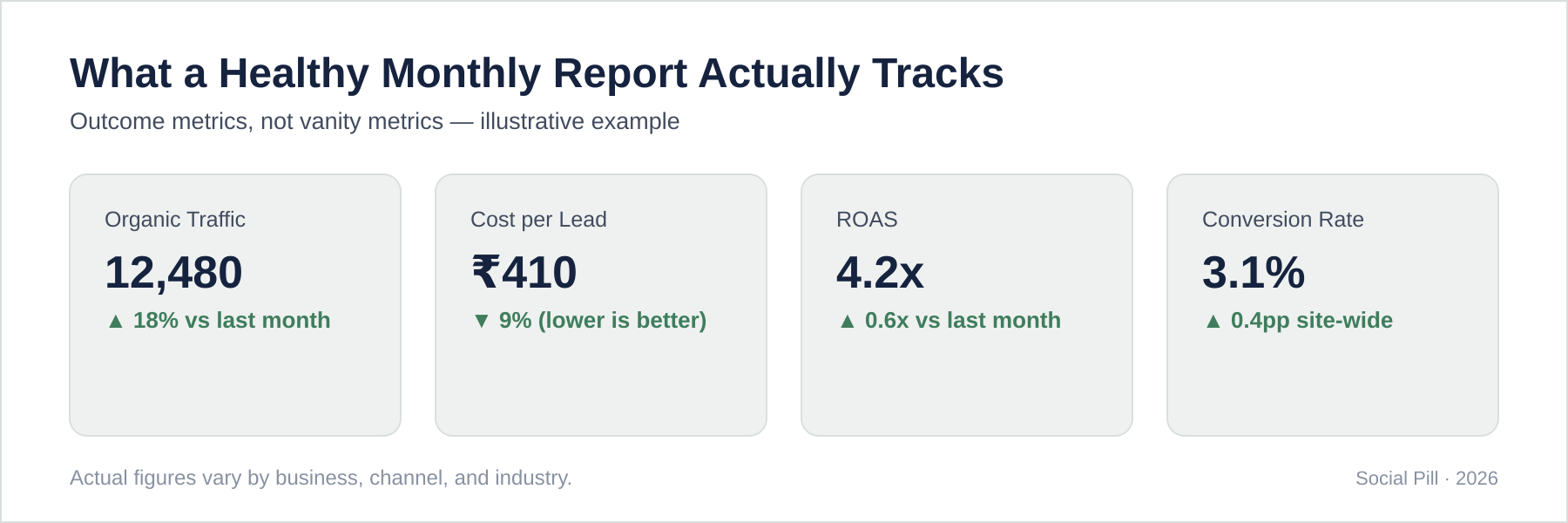
You should never have to chase an agency for a straight answer about how your campaigns are performing. The best agencies in India in 2026 build reporting around business outcomes leads, conversions, revenue, ROAS not vanity metrics like impressions or likes dressed up to look like progress.
Reporting Cadence
Ask what a standard monthly report looks like before you sign, and ask to see a sample. Reporting cadence matters too: monthly is standard, but for performance marketing specifically, you should expect access to a live dashboard or at minimum a bi-weekly check-in, since paid media performance can shift quickly and waiting a full month to react is expensive.
Getting KPIs Right for Your Goal
Equally important is agreeing on the right KPIs upfront:
- Goal is lead generation? Cost per lead and lead-to-customer conversion rate matter more than raw traffic.
- Goal is brand visibility? Share of voice and branded search volume are more honest measures than follower counts.
A good agency will push back if you fixate on the wrong metric that pushback is itself a sign of expertise, whether that means better targeting or genuinely improving your website’s conversion rate.
Communication and Accessibility
You’ll notice how easy or difficult an agency is to work with long before the contract is signed. Their website should make it obvious how to get in touch and what the first step looks like, whether that’s booking a consultation or submitting a brief. If navigating their own site feels like a maze, working with them will likely feel the same way.
Beyond the sales process, ask how communication will actually happen once you’re a client: a shared Slack channel, weekly calls, a project management tool, or email threads that take three days to get a reply. Mismatched communication styles an agency that wants monthly syncs when you need weekly ones cause more friction over a year than almost any strategic disagreement.
Pricing: What Digital Marketing Really Costs in India
Digital marketing pricing in India varies widely based on scope, agency size, and city, and understanding realistic ranges protects you from both overpriced generalists and underpriced operators who cut corners.
Starter, Growth, and Full-Service Tiers
- Starter: A focused single-channel engagement SEO or social media management alone.
- Growth: Two to three channels working together with shared strategy and reporting.
- Full-service: Strategy, paid media management, content, and reporting under one team the highest investment, but the most compounding.
How Paid Media Is Typically Billed
Paid media management is usually charged as a percentage of ad spend on top of the media budget itself, or as a flat management fee for smaller budgets. Be wary of any agency that won’t clearly separate their management fee from your actual ad spend this is one of the most common places pricing gets obscured.
The cheapest quote is rarely the best value once you account for missed deadlines, generic strategy, and the cost of redoing work with a new agency six months later. Price your decision against total cost of a wrong choice, not just the monthly invoice this is exactly the kind of accountability we build into our performance marketing services.
Contracts, Ownership, and Exit Terms
Before signing anything, understand what happens if the relationship ends. Reputable agencies build on your assets your website, your ad accounts, your domain authority rather than locking value inside their own systems.
What to Check Before You Sign
- Does content, backlinks, ad account structure, and technical SEO work stay with you after exit or disappear with the agency?
- What’s the notice period, and what does offboarding actually look like?
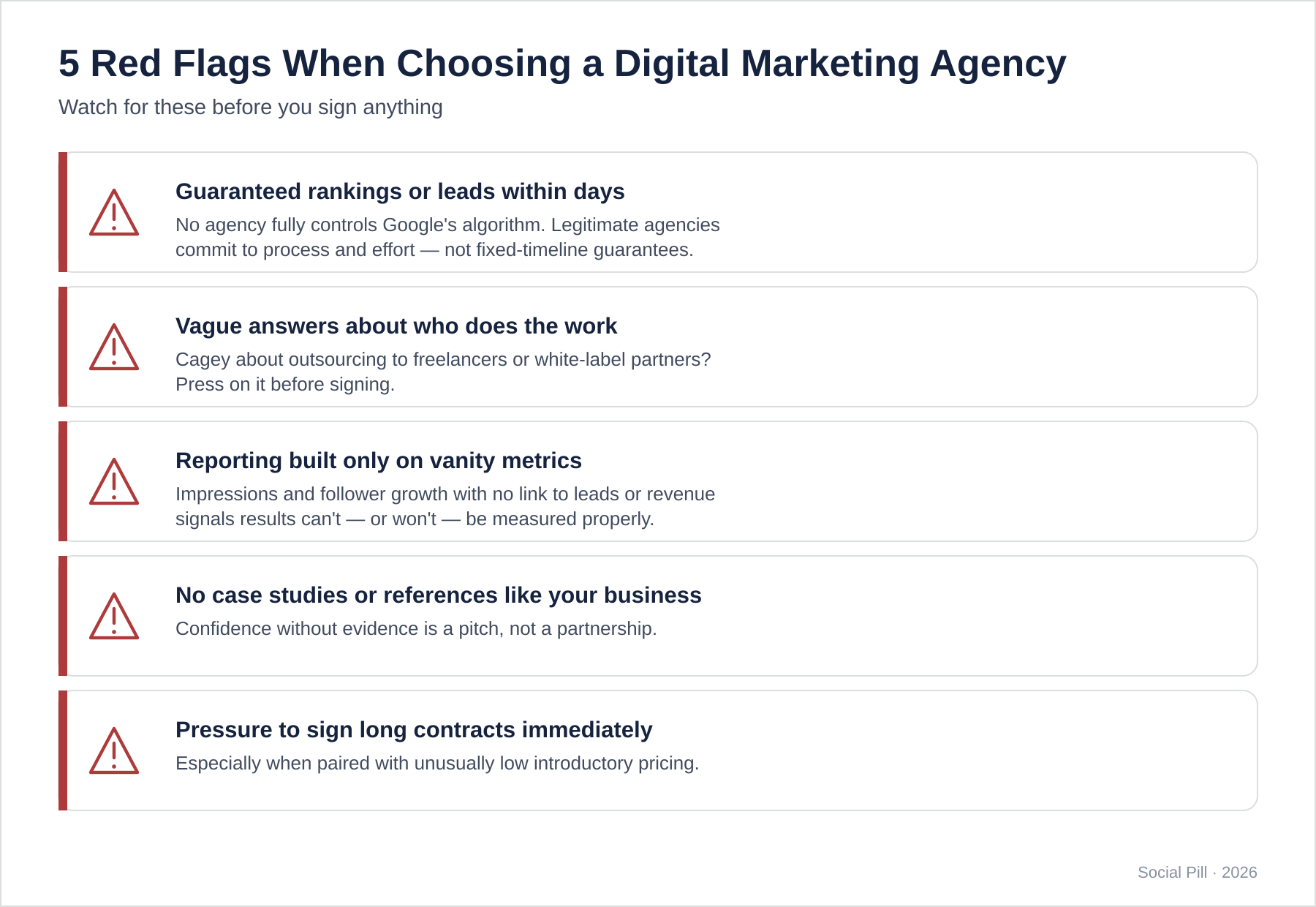
- Are any performance guarantees tied to process and deliverables (audits completed, content published, campaigns launched) not vague promises like “guaranteed #1 ranking,” which no legitimate agency controls?
Red Flags to Watch For
Certain claims and behaviours should slow you down immediately during agency evaluation.
Look for a Long-Term Growth Partnership
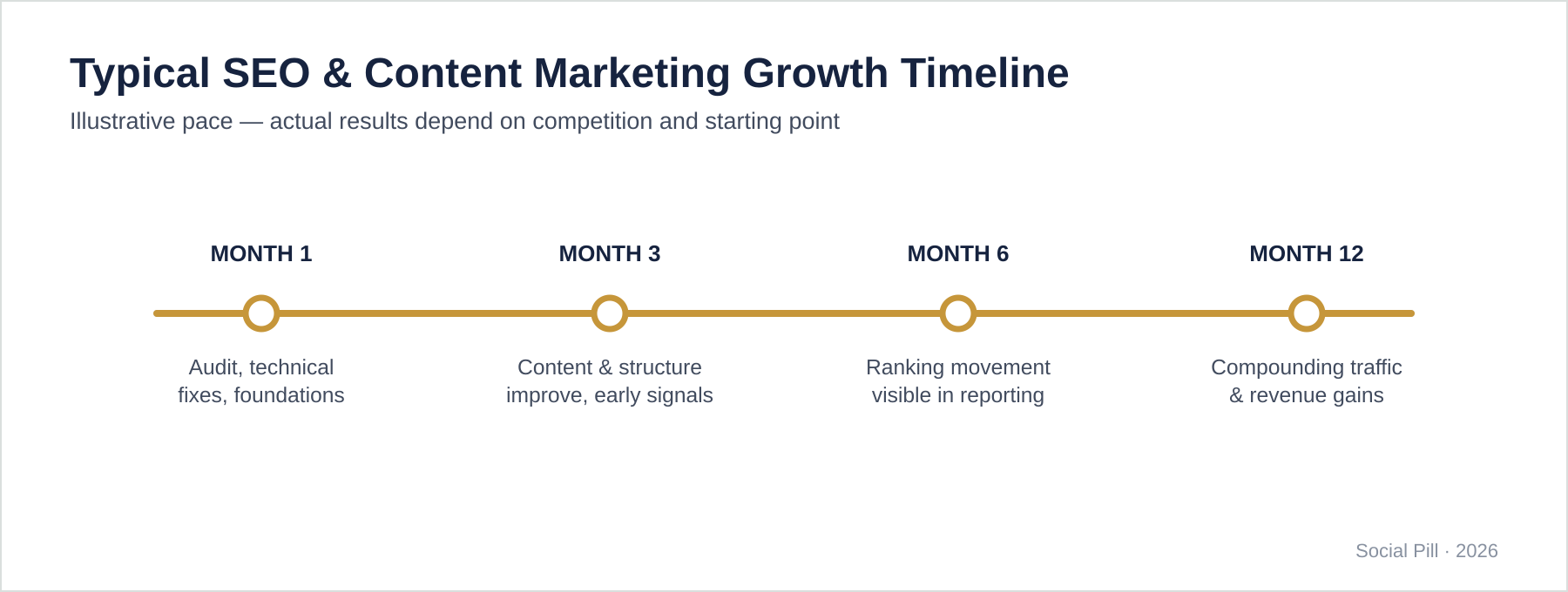
Digital marketing compounds it isn’t a purchase you make once and forget. SEO built on solid technical foundations and quality content today keeps paying off in organic traffic for years; content built cheaply and quickly usually needs to be redone, costing more in the long run than doing it properly the first time. This is exactly why agency selection matters so much: a six-month engagement with the wrong SEO partner doesn’t just waste six months; it can leave behind thin content and low-quality backlinks that take additional months to unwind before real progress can resume.
The agencies that deliver the strongest results tend to operate less like vendors executing a fixed brief and more like an extension of your internal team flagging opportunities proactively, adapting strategy as your business and the market shift, and treating your KPIs as their own, including channels like LinkedIn marketing for B2B brands when that’s where your buyers are.
Follow Your Instincts (And Then Verify Them)
Once an agency checks the practical boxes relevant experience, credible track record, transparent reporting, fair pricing trust your read of them too. Do you like how they present ideas? Did their team ask sharp questions about your business, or did they mostly talk about themselves?
Instinct is a useful final filter, but only after the practical due diligence is done, not instead of it. A great first impression paired with weak case studies and vague reporting practices is still a risk; the strongest signal is when both the gut check and the paperwork agree.
Conclusion
Choosing the right digital marketing agency in India comes down to a handful of decisions made carefully, in order: know your goals and budget before you start looking, understand whether an agency, freelancer, or in-house team actually fits your stage of growth, and evaluate potential partners on relevant experience, verifiable track record, team expertise, and transparent reporting not on the confidence of the pitch alone.
Treat pricing as an investment tied to outcomes rather than a line item to minimise, and read contracts carefully for ownership and exit terms before you’re locked in. When the practical due diligence and your instinct about the team both point the same way, you’ve likely found a partner worth building with for the long term.
At Social Pill, we work as a strategic growth partner for Indian brands, combining SEO, performance marketing, social media, content, branding, and AI-driven marketing under one accountable team, with reporting built around the metrics that actually move your business forward. If you’re evaluating agencies right now, we’re happy to walk you through exactly how we’d approach your specific goals no pressure, no generic pitch.
FAQs
1. How long does it take to see results from a digital marketing agency in India?
Paid ads can start generating results in a few weeks, while SEO and content marketing usually take 4–6 months to build momentum.
2. How much does hiring a digital marketing agency in India cost?
There’s no fixed price; it depends on your goals, the services you need, and the agency you choose.
3. Should I choose a local agency in my city, or can I work with one elsewhere in India?
Not necessarily; many businesses successfully work with agencies across India as long as communication and expertise are strong.
4. Is it better to hire a digital marketing agency or build an in-house team?
If you’re looking for access to multiple specialists without building a full team, an agency is often the smarter choice.
5. What’s the biggest mistake businesses make when choosing a digital marketing agency?
Focusing only on the lowest price instead of looking at experience, results, and the way the agency works.
6. What questions should I ask before signing with a digital marketing agency?
Ask about their past results, who’s managing your account, how they’ll measure success, and what the contract includes.