Every founder asks some version of the same question eventually: we’re spending on marketing, so why isn’t it translating into revenue? It’s a fair question, because “digital marketing” has become a catch-all term that gets used to describe everything from a boosted Instagram post to a full-funnel growth strategy, and those two things produce wildly different business outcomes. Plenty of businesses have run campaigns, posted consistently, and even seen their follower count climb, only to find none of it shows up in the sales numbers. That gap is usually not a failure of effort; it’s a failure of strategy, measurement, or both.
This guide sets out to answer the real question underneath: how, specifically, does hiring a digital marketing agency move the needle on revenue, leads, retention, and market share? Not in vague terms like “visibility” and “engagement,” but in the outcomes a business owner or CMO actually reports to the board. We’ll walk through why digital marketing matters more than ever for growth in India specifically, exactly what a competent agency does across six core capabilities, how to tell if that work is actually paying off, and how Social Pill approaches this as a growth partner rather than a vendor.
Why Digital Marketing Is Important for Business Growth
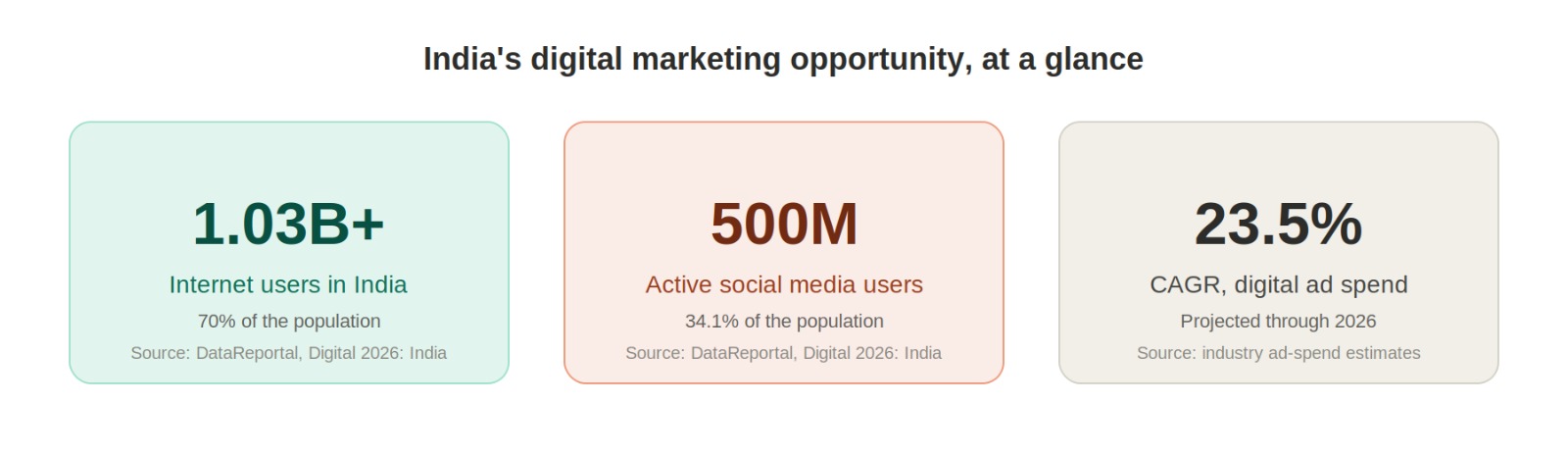
Consumer behaviour has permanently shifted online. India now has roughly 1.03 billion internet users, about 70% of the population, and 500 million active social media identities (DataReportal, Digital 2026: India, November 2025). That’s not a niche audience anymore; it’s the mainstream market for almost every category, from FMCG to B2B services. What’s changed isn’t just where people are; it’s how they buy. A prospective customer today discovers a brand on Instagram or YouTube, researches it on Google, compares reviews, checks a competitor’s site, and only then converts, often weeks later, across multiple devices. This is the modern buying journey, and unlike a newspaper ad or a hoarding, it happens across dozens of touchpoints that a business has to show up on consistently to even be considered.
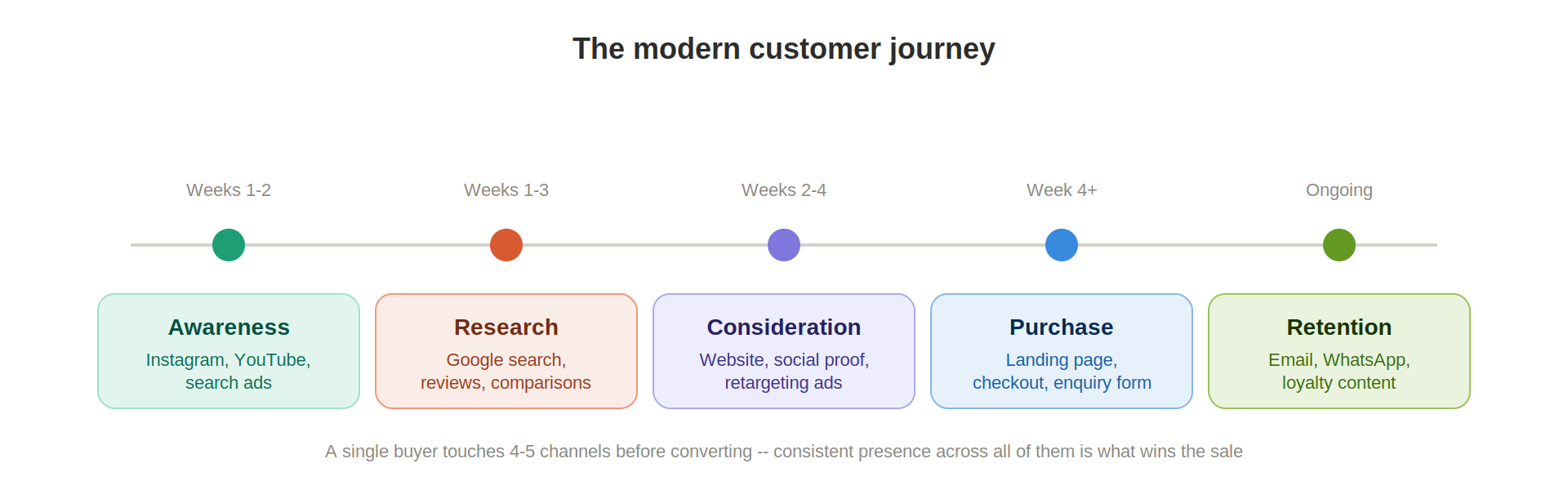
That fragmentation is also why data-driven decision-making has become non-negotiable. Traditional marketing offered no real way to know which rupee of spend produced which sale. Digital channels do every click, form fill, and add-to-cart is trackable, which means budgets can be reallocated toward what’s actually working instead of what “feels right.” Businesses that use this data well pull ahead of competitors that are still guessing. For Indian businesses specifically, this shift matters even more. Regional-language content, WhatsApp-based commerce, and mobile-first design aren’t optional extras here; they’re how a large share of the country’s newer internet users actually engage with brands, particularly outside metro cities. Around 90% of new Indian internet users prefer content in their native language over English or Hindi (WebeeSocial, 2026), which means a national campaign built in a single language is structurally leaving demand on the table across large parts of Tier-2 and Tier-3 India. A business that treats digital as one campaign, one language, one channel is competing with one hand behind its back against rivals who aren’t.
There’s also a competitive-advantage argument that’s easy to underestimate: digital channels have levelled the playing field between large, established players and smaller, newer ones. A well-run agency can put a growing business’s targeting, creative quality, and measurement on par with a much bigger competitor’s something practically impossible when reach was determined by TV and print budgets alone. Traditional marketing alone can no longer deliver the targeting precision, measurability, or cost-efficiency that growth-stage businesses need, which is exactly the gap digital marketing agencies are built to close.
How Digital Marketing Agencies Help Grow Your Business
A good agency isn’t a vendor that “does marketing.” It’s a growth function a business doesn’t have to build in-house one that connects six distinct capabilities, each solving a different part of the growth problem. Here’s how each one actually contributes to the bottom line.
1. Increase Brand Visibility
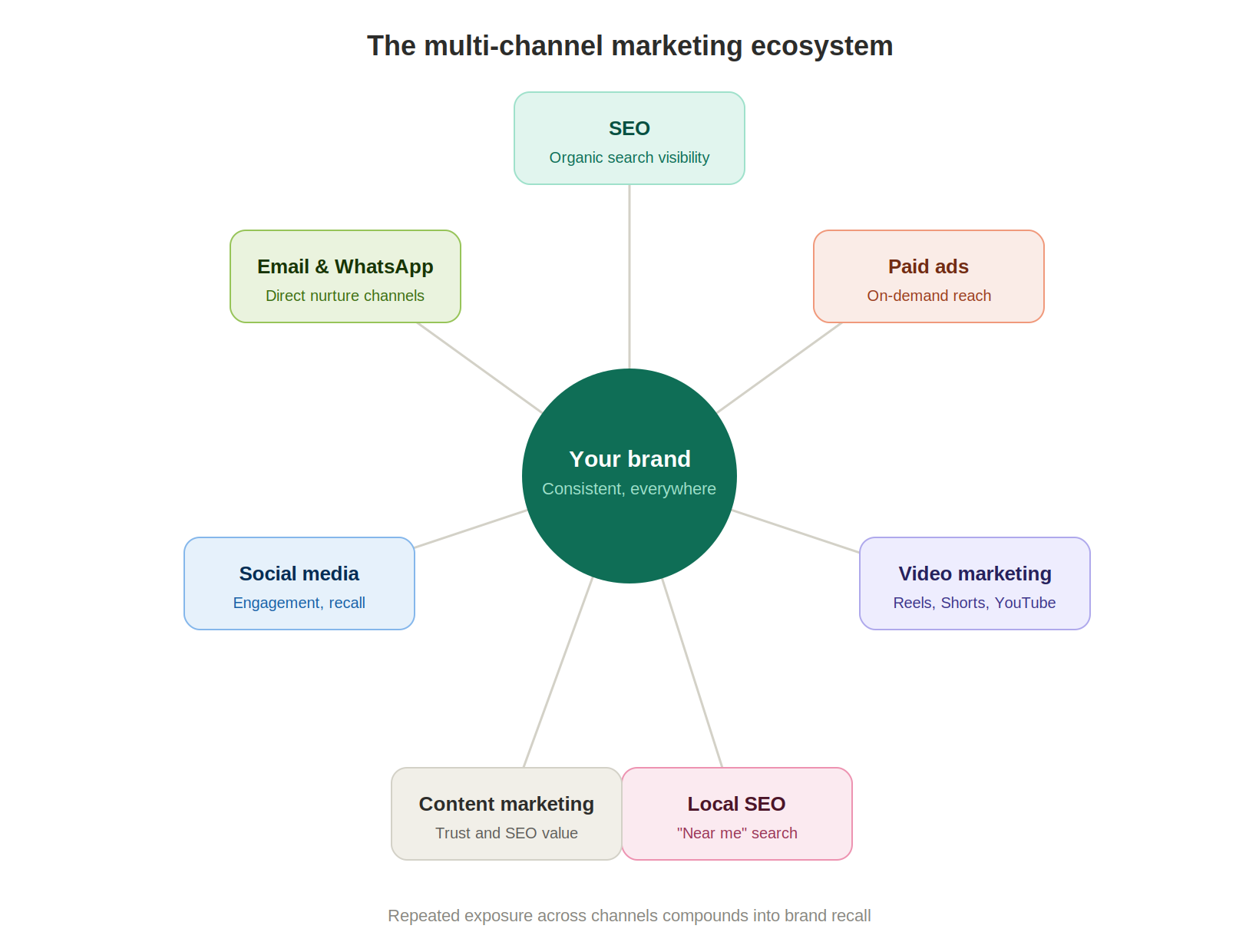
Visibility is the foundation everything else is built on; you can’t generate leads from an audience that has never heard of you. Agencies build this visibility across the channels where buying decisions actually get made: SEO services to win organic search real estate, social media to stay top-of-mind, paid ads to accelerate reach on demand, content marketing to earn trust while ranking, Local SEO to dominate “near me” searches, and short-form video to capture attention in the format Indian audiences now consume most video already accounts for over 60% of digital content consumption in India (WebeeSocial, 2026).
The compounding effect matters more than any single channel: a buyer who sees a brand’s ad, then its Reel, then its site in search results trusts it more than one who’s seen it once. That repeated, multi-channel exposure is what turns into brand recall, and recall is what gets a business shortlisted before a competitor, months before the actual purchase happens.
2. Generate Qualified Leads
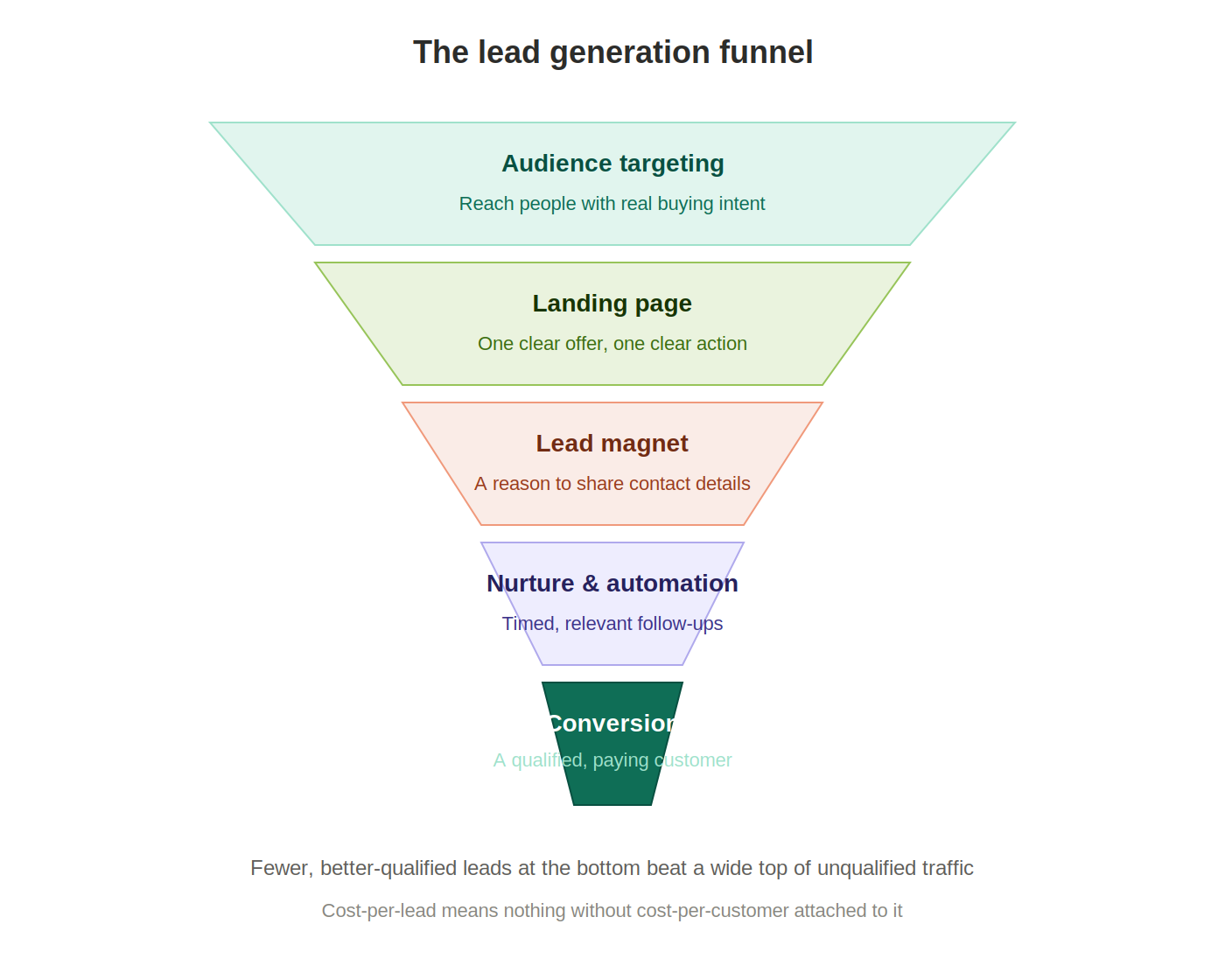
Traffic without conversion is a vanity metric. Lead generation done well starts with precise audience targeting, so budget reaches people who actually have a reason to buy, not everyone who fits a broad demographic. From there, Performance Marketing drives intent-based traffic to purpose-built landing pages designed around one action, backed by lead magnets that give a prospect a reason to hand over their contact details before they’re ready to buy outright.
Agencies then map that lead into a proper conversion funnel rather than letting it go cold, using marketing automation to nurture it with timed, relevant follow-ups. This is where quality decisively beats quantity: 500 unqualified leads that never convert cost more in sales-team time than 50 well-targeted ones that close. A business’s cost-per-lead means nothing without cost-per-customer attached to it.
3. Build Trust and Credibility
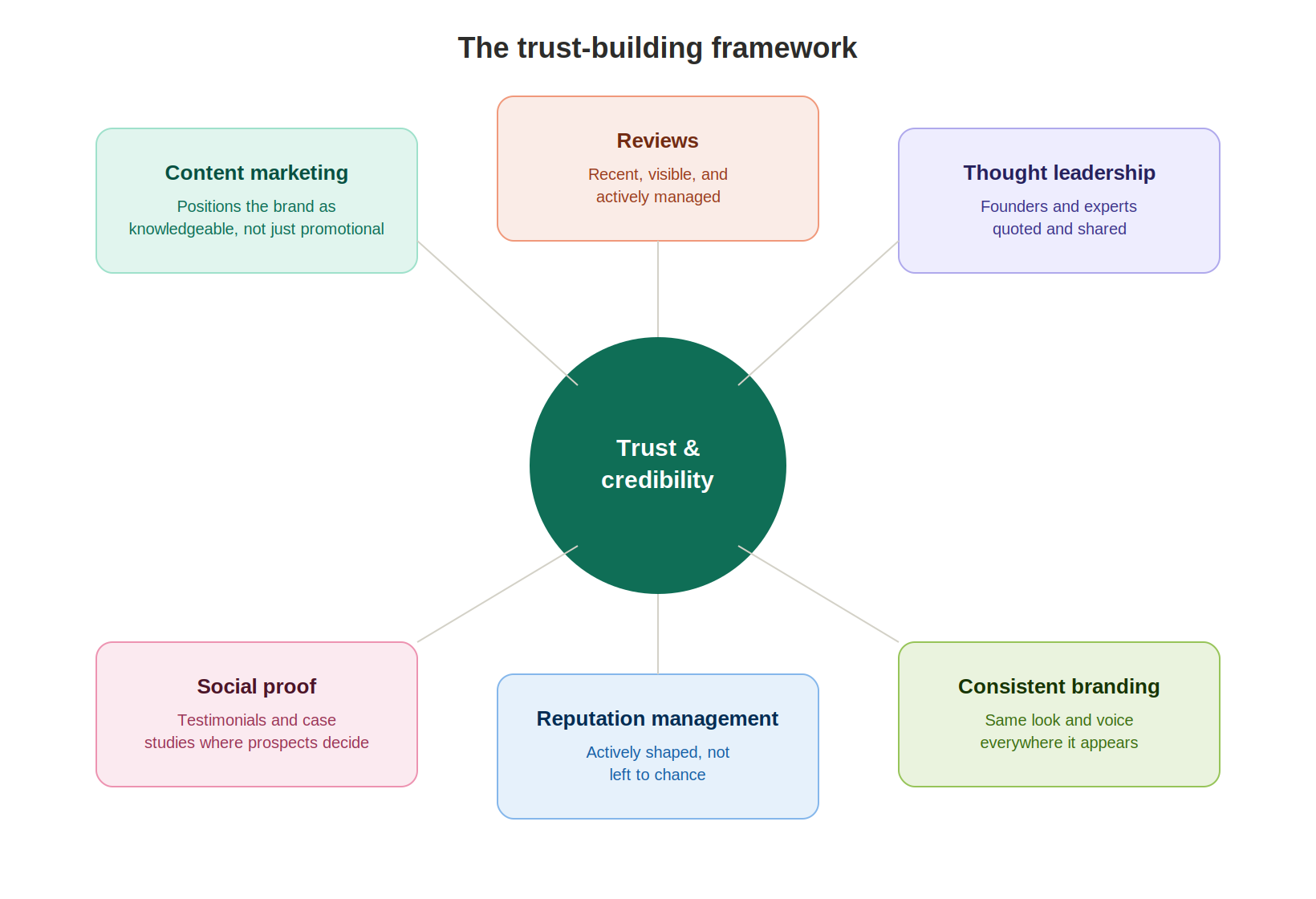
Indian consumers research heavily before buying, especially for considered purchases and trust signals are what convert that research into a decision. Agencies build this through consistent content marketing that positions a brand as knowledgeable rather than just promotional, active management of reviews and online reputation, thought leadership content that gets founders and experts quoted and shared, and visible social proof: testimonials, case studies, user-generated content placed exactly where a prospect is deciding.
Consistent branding ties all of this together: a business that looks and sounds different across its website, social channels, and ads erodes the very trust it’s trying to build. Credibility compounds slowly, but once established, it lowers the resistance in every future sales conversation.
4. Reach the Right Audience
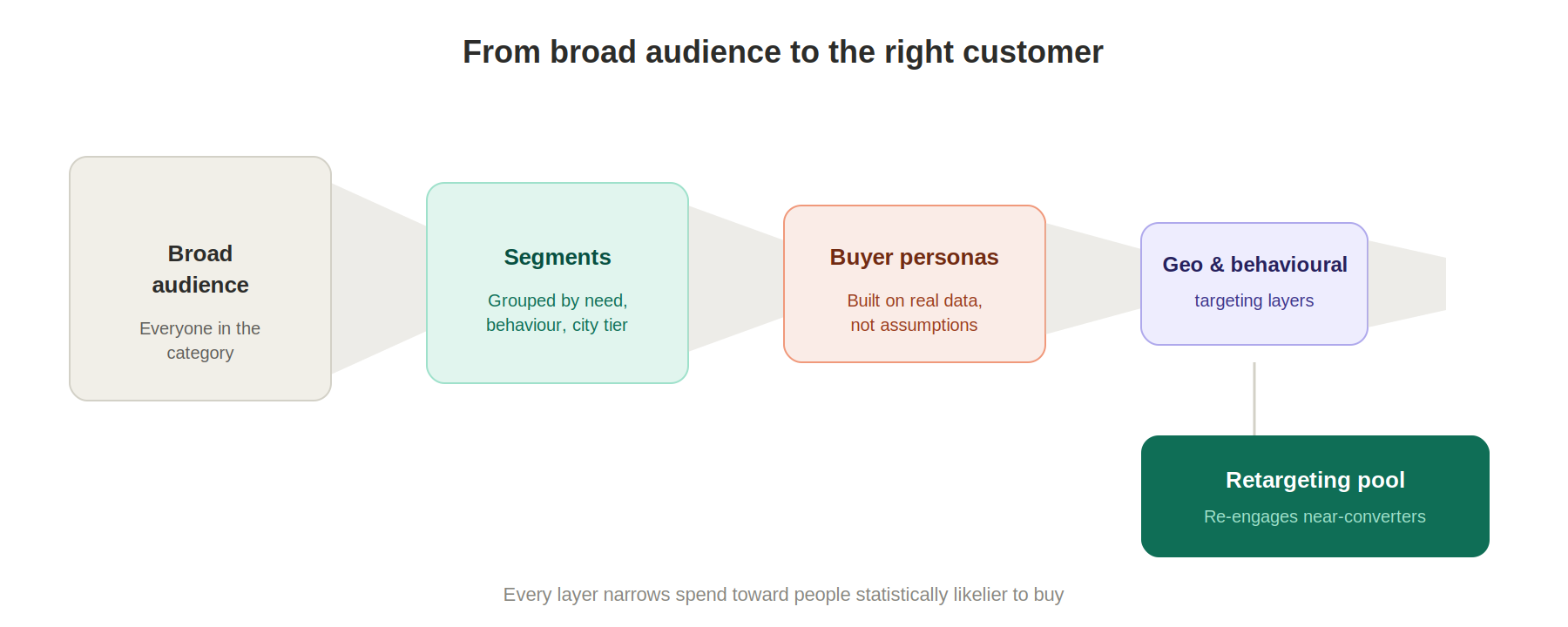
Growth stalls when budget is spent reaching people who were never going to buy. Agencies fix this with audience segmentation and detailed buyer personas built from real data income bracket, city tier, interests, past behaviour rather than assumptions.
Layered on top of that: geo-targeting, so a business with three Mumbai outlets isn’t paying to advertise in Chennai, and behavioural targeting, which reaches people based on what they’ve actually done online, not just who they demographically resemble. Retargeting closes the loop by re-engaging the largest untapped opportunity most businesses have the visitors who almost converted and left. Together, these tools mean every rupee of ad spend is working on people statistically likelier to buy, which directly lowers customer acquisition cost.
5. Measure and Optimise Results
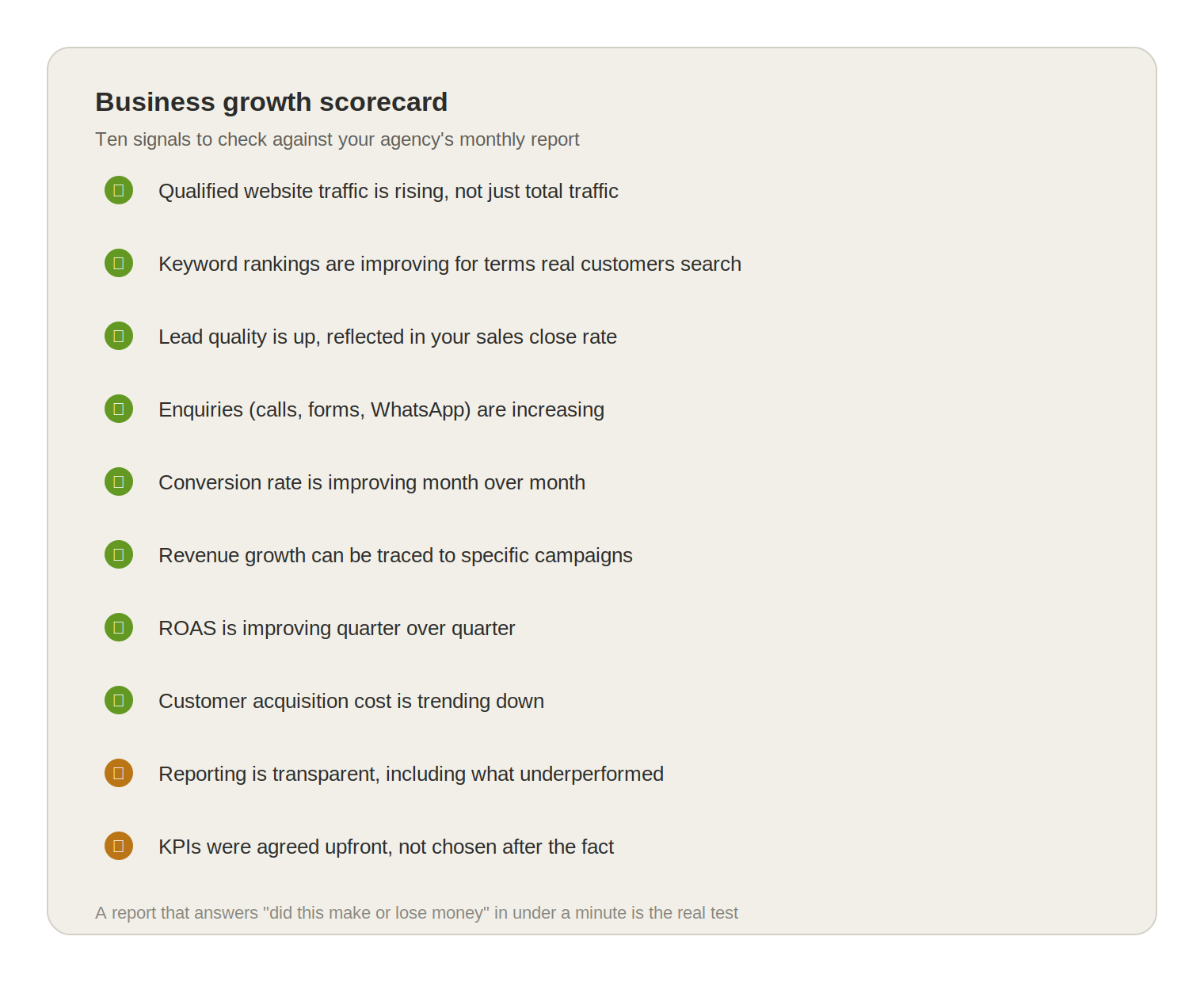
This is the discipline that separates a real growth partner from an agency running campaigns on autopilot. Every campaign is tied to defined KPIs leads, cost per acquisition, ROAS, revenue tracked through analytics and conversion tracking rather than vanity metrics like impressions or likes.
From there, Conversion Rate Optimisation and structured A/B testing turn “this campaign is doing okay” into “this specific headline, page layout, or audience segment is outperforming the rest by X%.” Campaign optimisation is continuous, not a quarterly review budgets shift toward what’s working within days, not months. This is also what makes an agency’s reporting credible: numbers a business can trace directly to revenue, not a slide of impressions.
6. Save Time While Accessing Expert Talent
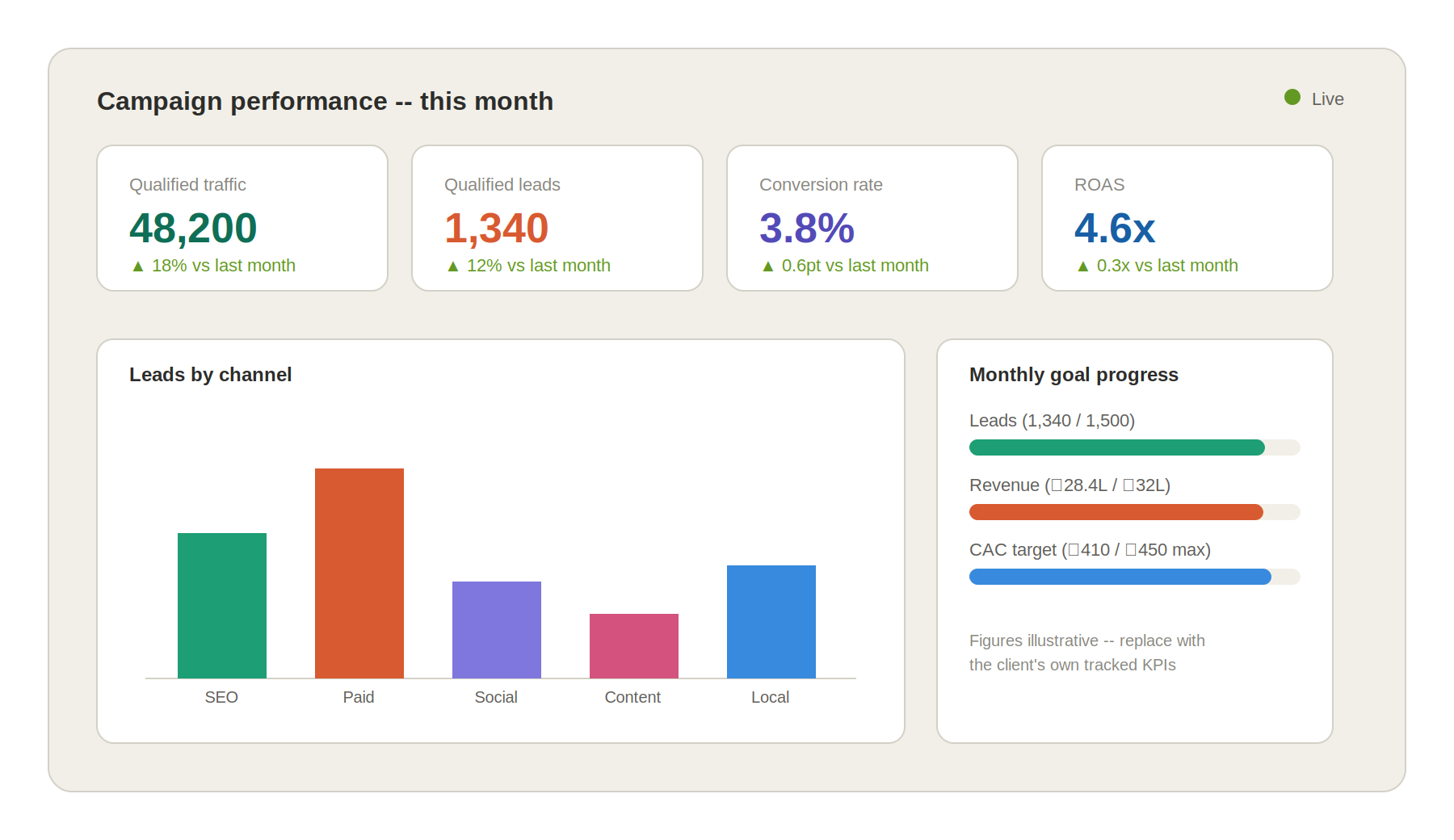
Building an equivalent in-house team an SEO specialist, a performance marketer, a content writer, a designer, a CRO analyst, a data analyst is expensive and slow to assemble, and harder still to keep current as platforms and algorithms change monthly. An agency gives a business that entire cross-functional team on demand, along with access to specialists a single in-house hire could never fully replace.
This translates into faster execution campaigns launch in days, not the weeks a hiring cycle would take and meaningful cost efficiency, since a business pays for outcomes and expertise rather than salaries, tools, and training. Agencies also carry the overhead of staying current on the latest platforms and ad formats, including AI-driven tools, so a business’s marketing keeps improving without that being anyone’s full-time internal job.
How to Know If a Digital Marketing Agency Is Actually Helping Your Business
Marketing reports full of impressions and follower counts are easy to produce and easy to hide behind. What actually indicates growth is a specific, measurable set of signals and any agency worth retaining should be reporting against these, not around them.
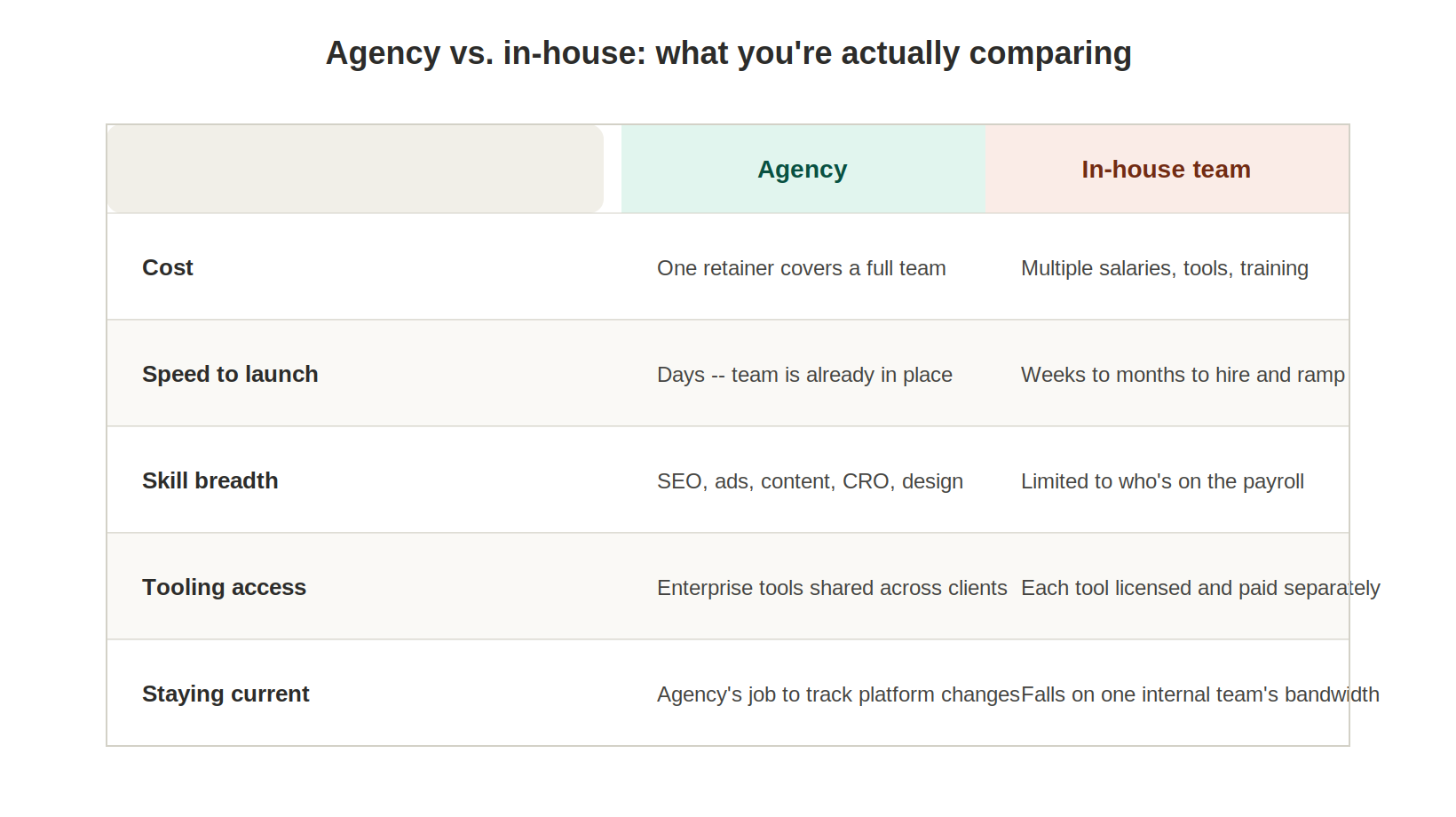
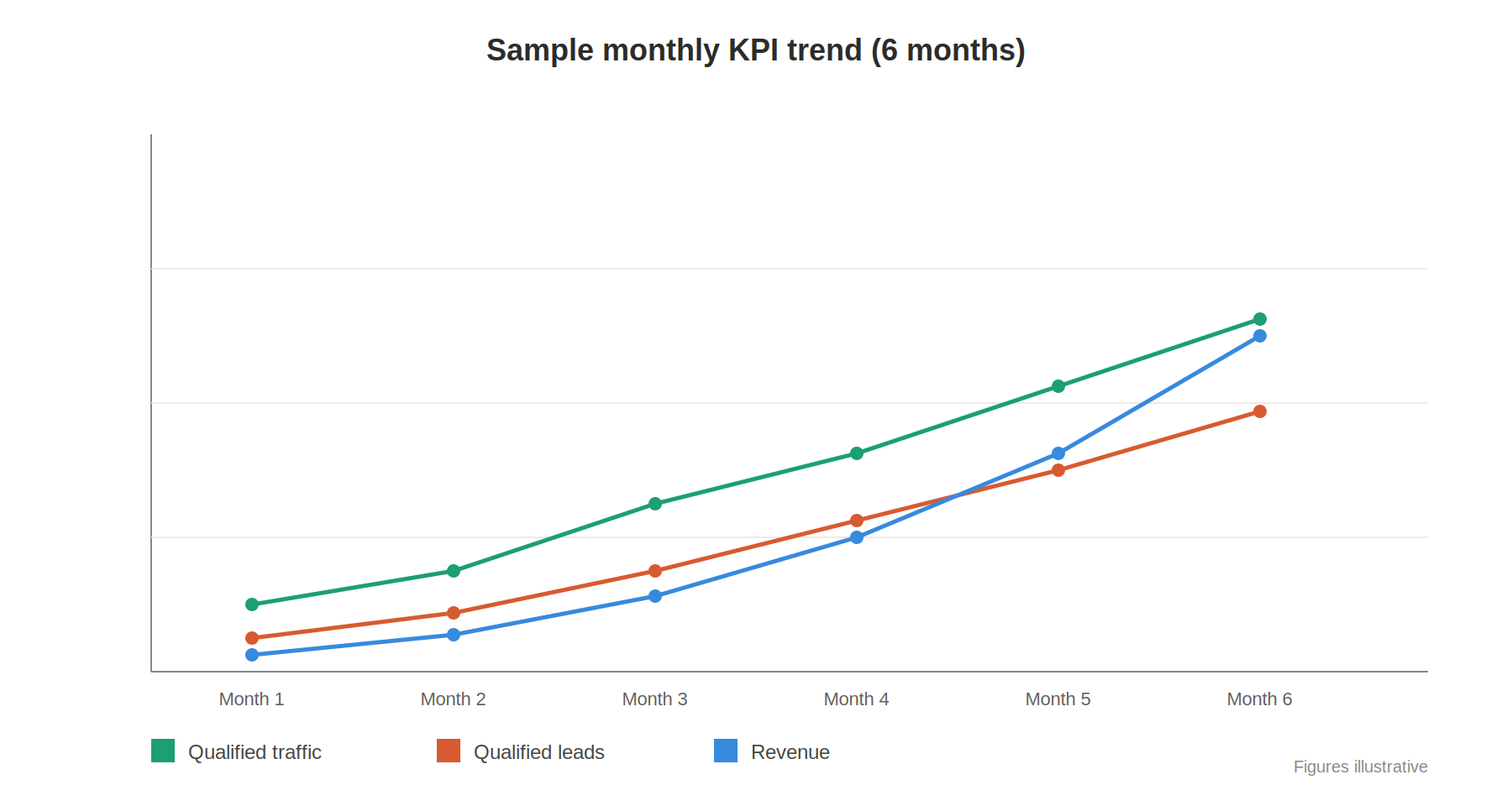
Look for: increased qualified website traffic (not just traffic that matches your buyer profile), better keyword rankings for terms your actual customers search, higher lead quality reflected in your sales team’s close rate rather than raw lead volume, and more genuine enquiries through calls, forms, or WhatsApp. On the commercial side, the indicators that matter most are improved conversion rates, measurable revenue growth attributable to specific campaigns, a better ROAS quarter over quarter, and a falling customer acquisition cost as targeting and funnels mature.
Just as important as the numbers themselves is how they’re delivered: transparent reporting that shows the full picture, including what underperformed and goal-based KPIs agreed upfront, rather than metrics chosen after the fact to look good. An agency that can’t clearly connect its activity to one of these outcomes isn’t proving growth; it’s proving activity.
A useful gut-check for any business currently working with an agency: if a monthly report could be handed to your finance team and they could tell, in under a minute, whether marketing spend last month made the business more or less money that’s a report built around growth. If it takes a follow-up call to explain what any of the numbers actually mean for the business, that’s usually a sign the KPIs were chosen to justify the activity, not the other way around.
How Social Pill Helps Businesses Grow
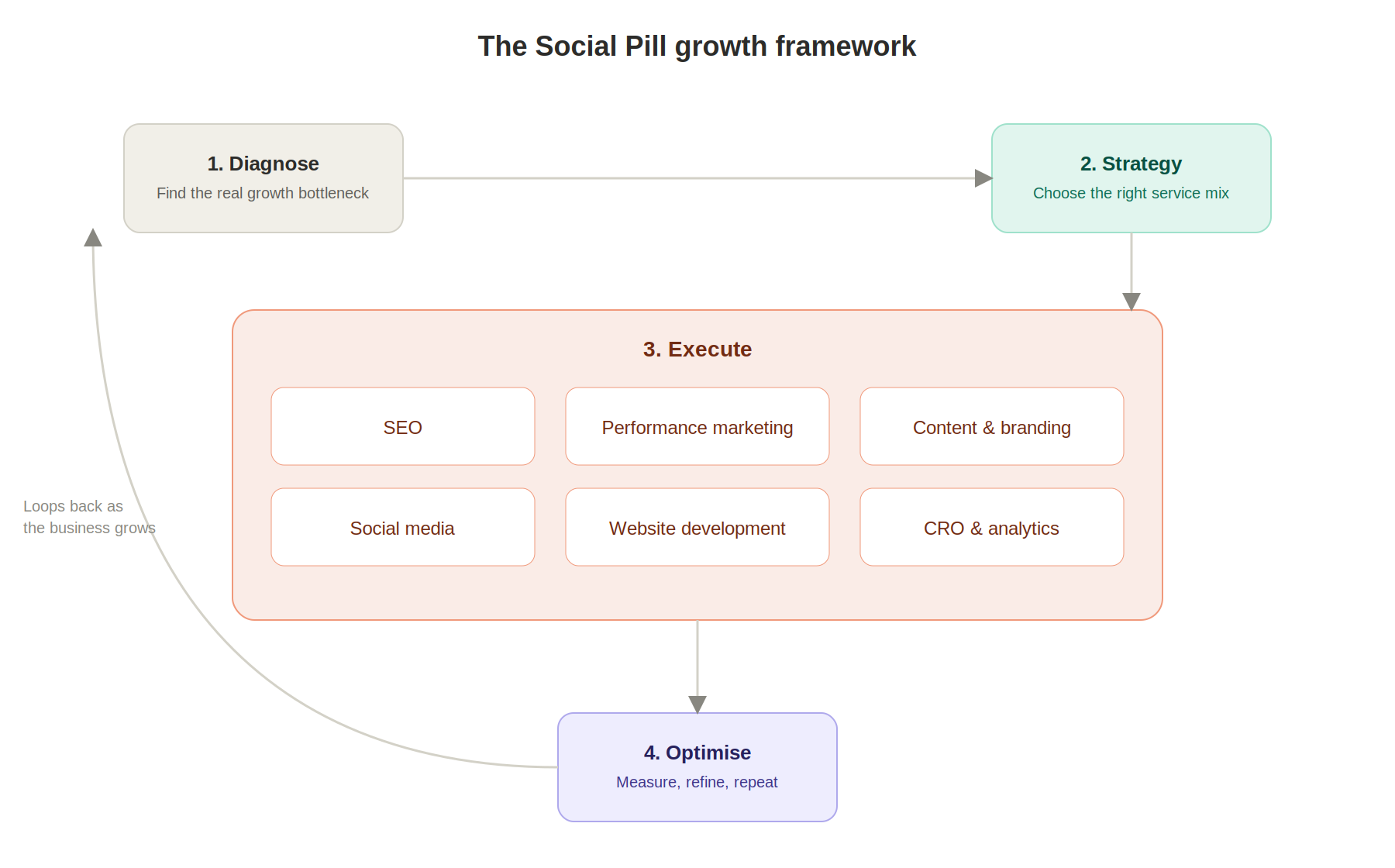
Social Pill was built around a simple premise: marketing activity that doesn’t move a business metric isn’t worth doing. That’s the lens every engagement starts from understanding what a business actually needs to grow, whether that’s revenue, market share, retention, or a stronger foundation to raise on, and only then deciding which services to deploy.
In practice, that means SEO and Performance Marketing working together rather than in silos, so organic and paid channels reinforce each other instead of competing for the same budget conversation. It means content marketing and branding built to earn trust with an Indian audience specifically, not adapted from a generic global template. It means social media and website development treated as revenue infrastructure, not brand decoration a site is only as good as what it converts.
Every engagement is anchored by CRO and analytics, because driving traffic to a site that leaks conversions is a wasted budget, and by continuous optimisation, because a strategy that was right last quarter isn’t automatically right this one. This is deliberately not a menu of services sold individually it’s a growth partnership built around solving the specific business problem in front of us, whether that’s stalled lead generation, flat organic growth, or a brand that’s invisible in a category its competitors have already claimed.
This business-first approach also shapes how engagements start. Rather than opening with a proposed list of services, the first conversation is diagnostic, understanding where the growth bottleneck actually sits. For one business that might be a website that gets traffic but doesn’t convert; for another, it might be strong local demand that isn’t reflected in search visibility; for a third, it might be a brand that’s never been given a consistent story across channels. The services deployed follow from that diagnosis, not the other way around.
If any of the gaps above sound familiar traffic that isn’t converting, reports full of metrics that don’t tie to revenue, or a marketing function that’s grown reactive rather than strategic that’s usually the sign it’s time for a conversation, not another campaign.
FAQS
- Is hiring a digital marketing agency worth it?
For most growing businesses, yes the combined cost of specialist talent, tools, and time an agency provides is typically lower than building the same capability in-house. - How do marketing agencies generate leads?
Agencies generate leads through targeted campaigns, optimised landing pages, lead magnets, and structured funnels that move a prospect from awareness to enquiry. - Does my business need a digital marketing agency?
If your growth depends on being found, trusted, and chosen online which is true for nearly every category today a digital marketing agency accelerates that process significantly. - How can an agency help my local business grow?
Through Local SEO, geo-targeted ads, and Google Business Profile optimisation, agencies help local businesses show up when nearby customers are actively searching. - What results should I expect from a digital marketing agency?
You should expect measurable improvements in qualified traffic, lead quality, conversion rates, and ultimately revenue not just higher impressions or follower counts. - How do agencies measure marketing success?
Agencies measure success through KPIs tied to business outcomes conversion rate, ROAS, cost per acquisition, and revenue tracked through analytics and reported transparently.
Ready to see what a growth-first digital marketing strategy could do for your business? Book a free consultation with Social Pill →