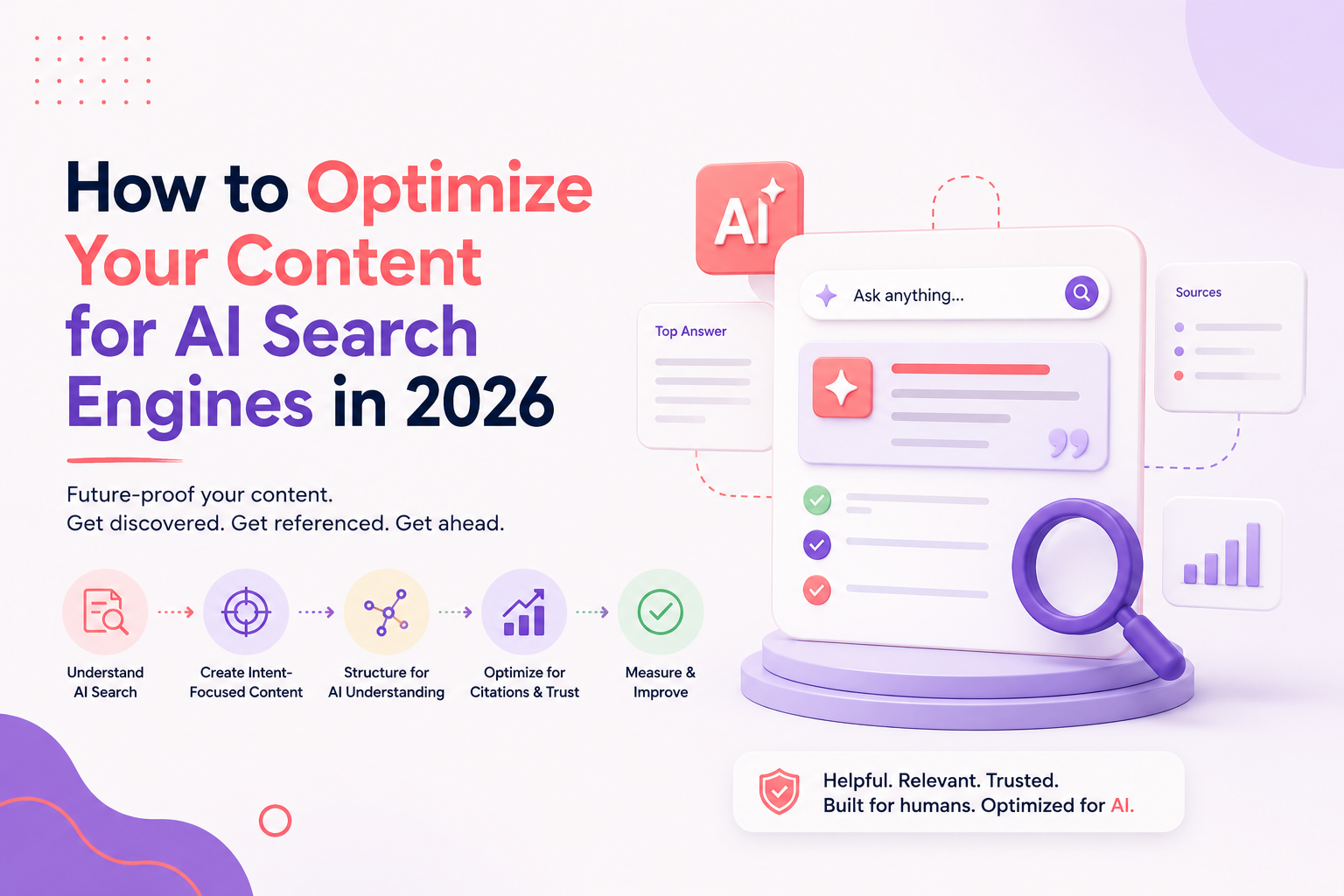
A customer searching for the best sunscreen for oily skin in India no longer has to open ten browser tabs. They can ask an AI search tool to compare ingredients, price and skin type in a single, synthesised answer. That shift is already changing how Indian consumers discover D2C brands. AI Overviews, ChatGPT, Perplexity and Gemini are becoming part of the research journey, sitting alongside traditional search rather than replacing it.
For marketing leaders, this raises a harder question than “where do we rank.” It’s “how does our content get chosen, understood and referenced by systems that summarise the internet instead of listing it?” This is where GEO, or Generative Engine Optimisation, comes in. It isn’t a replacement for SEO. It’s an extension of it built around making content easier for both people and AI systems to understand, verify and reference. This guide breaks down what that actually means for Indian D2C and FMCG brands in 2026, with a practical framework you can apply without guesswork or guaranteed-results hype.
What Does It Mean to Optimize Content for AI Search?
Optimizing content for AI search means making it easier for generative systems to find, interpret and reference your information when answering a user’s question. It is not about tricking an algorithm. It’s about removing friction between what you know and what the AI system needs to explain it well. The goal is content that is discoverable, understandable, extractable, trustworthy, contextually relevant and genuinely useful enough to be worth citing.
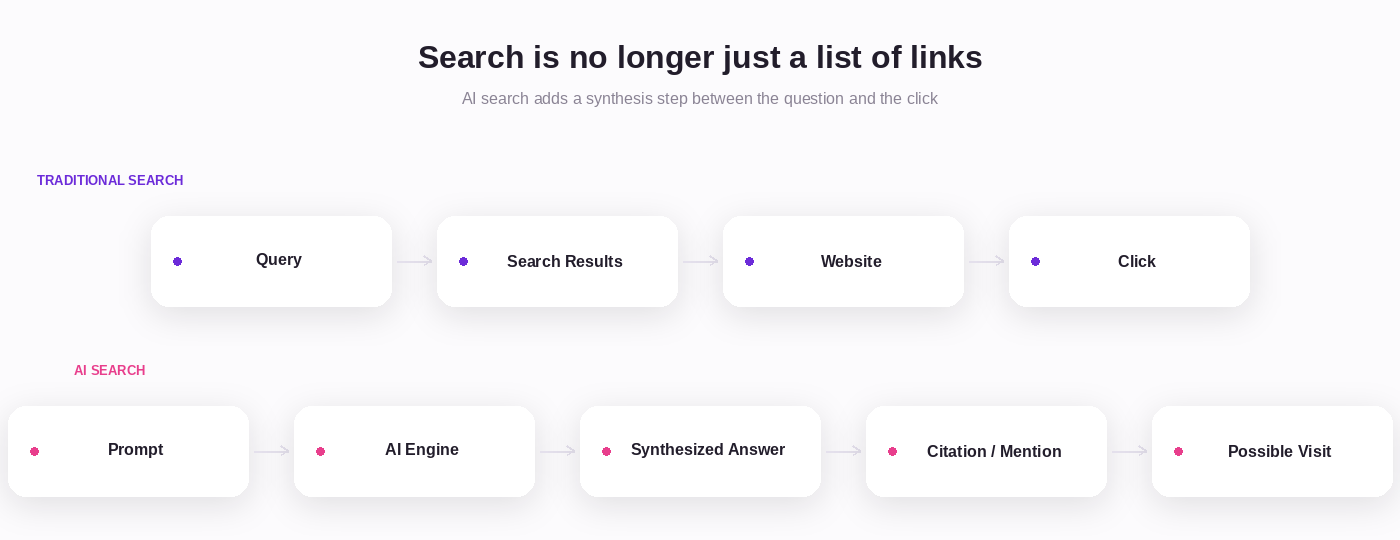
Traditional search still works in a fairly linear way:
Query → Search engine → Ranked results → Click
AI search compresses that path:
Prompt → AI system → Synthesized answer → Sources, citations or mentions
Consider an Indian D2C protein brand. On Google, it might rank for “best whey protein for beginners India” and win a click. On an AI search tool, the same question could return a synthesised answer comparing three brands, with the D2C brand mentioned only if its content clearly explains dosage, ingredient sourcing and who it’s suited for. The click may or may not happen. The mention is what matters first.
How AI Search Engines Find and Use Content
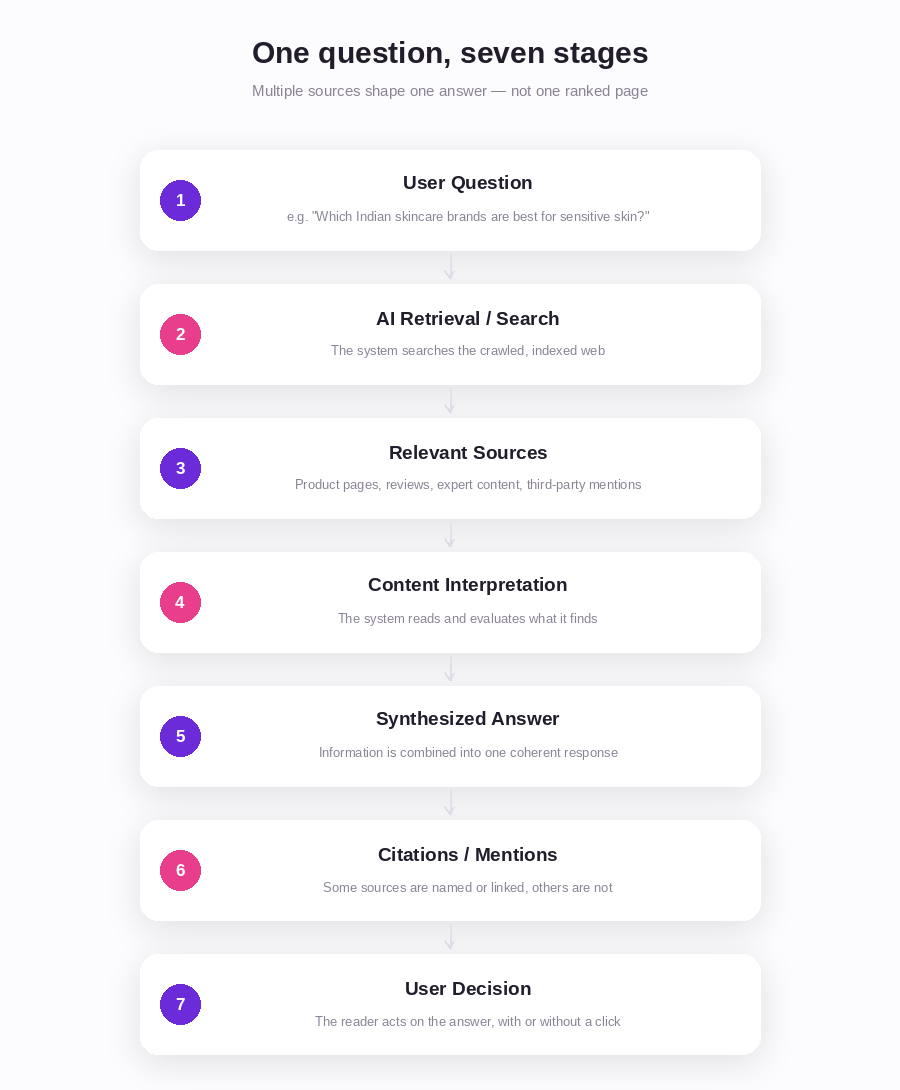
At a high level, AI search systems retrieve relevant information, interpret the user’s intent, synthesise material from multiple sources, and generate an answer, sometimes with citations or links attached. It’s worth being precise here: AI search is not one algorithm. ChatGPT, Perplexity, Gemini and Google’s AI Overviews can retrieve and weigh information differently. This matters because marketers should stop hunting for a single universal “GEO ranking factor.” There isn’t one.
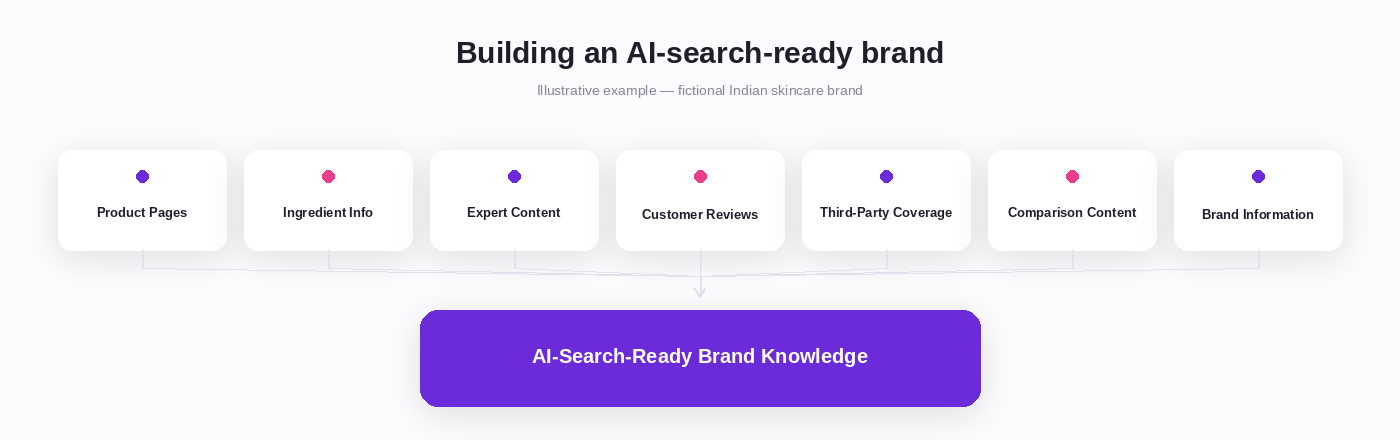
Take the prompt: “Which Indian skincare brands are best for sensitive skin?” To answer this well, an AI system may draw on a brand’s product pages, ingredient lists, expert-reviewed content, customer reviews, third-party mentions and broader category context. No single page decides the outcome. The brand’s entire information footprint does. That’s why AI visibility depends on more than any one landing page it depends on the depth and consistency of a brand’s presence across its own site and the wider web.
SEO Still Matters for AI Search
GEO is not a reason to abandon SEO. It’s the opposite. Strong technical and content SEO is what makes AI visibility possible in the first place. Crawlability, indexing, clean site structure, internal linking, clear search intent targeting and topical relevance all still matter. AI systems generally rely on the same crawled, indexed web that traditional search engines use. If your content is hard to find or hard to parse, it’s hard to be referenced.
A D2C nutrition brand with unindexed product pages, inconsistent ingredient details across its site, or a confusing site structure is unlikely to show up in an AI-generated answer no matter how well-written its blog is. The technical foundation has to be solid before anything else can work. Strong SEO doesn’t guarantee AI citations. But weak SEO makes AI visibility almost impossible.
10 Ways to Optimize Content for AI Search Engines in 2026
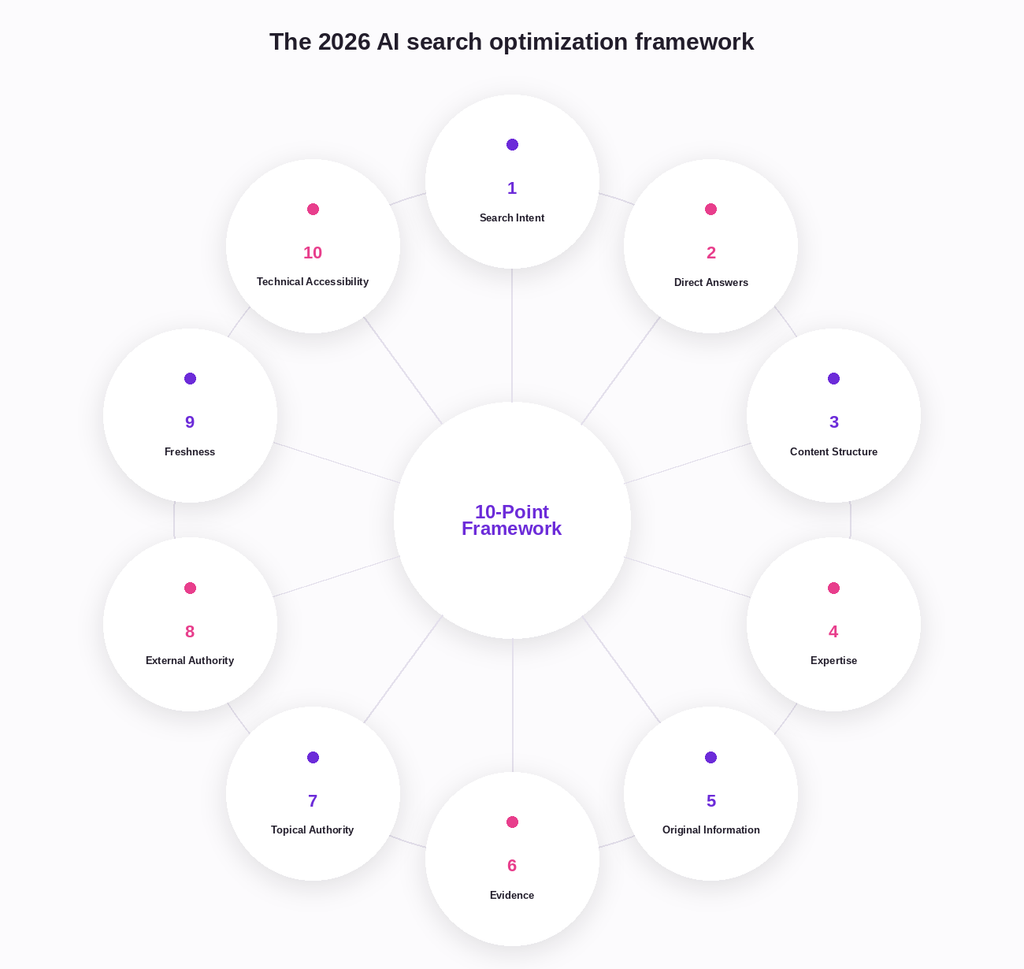
1. Answer the Searcher’s Question Directly
Don’t bury the answer under a long introduction. Lead with the useful information, then support it.
Weak: “Skincare has evolved significantly over the years, with new ingredients entering the market constantly.”
Better: “Niacinamide can help support the skin barrier and regulate excess oil, making it useful for many oily-skin routines.”
The second version gives an AI system and a human reader something concrete to extract in the first sentence. Everything after that can add depth, evidence and nuance.
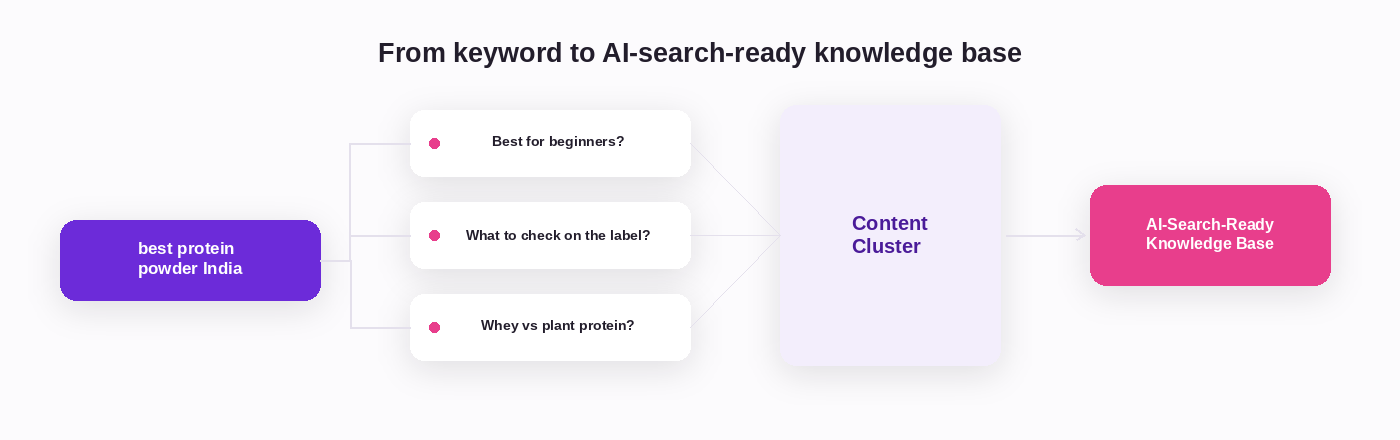
2. Build Content Around Questions, Not Just Keywords
AI search expands keyword research into conversational intent. A single keyword can branch into several real questions people actually ask. Take “best protein powder India.” Around it sit questions like: Which protein powder is best for beginners? How much protein should I consume daily? What should I check on a protein powder label? Is whey better than plant protein?
Each of those questions can become its own supporting piece, feeding into one topic cluster rather than one isolated article.
3. Structure Content So AI Can Understand It
Use descriptive H2s, purposeful H3s, short paragraphs, numbered steps, comparison sections and FAQs. This helps readers scan and helps AI systems extract discrete pieces of information.
A product comparison page, for example, should clearly separate ingredients, price, use case and skin type into their own labeled sections not bury those details inside one dense paragraph. Structure serves the reader first. The machine-readability benefit follows from that, not the other way around.
4. Strengthen Your E-E-A-T Signals
Experience, Expertise, Authoritativeness and Trust aren’t abstract concepts. A wellness brand publishing a nutrition article can name its author, credit a qualified reviewer, and link to the studies it references.
This isn’t a guaranteed ranking factor on every AI platform. But it’s a reliable way to build content that’s genuinely more credible which is what these systems are ultimately trying to identify.
5. Add Original Information AI Systems Cannot Easily Find Elsewhere
Generic content gets synthesised and forgotten. Original content gets remembered and referenced. That could mean proprietary research, customer surveys, first-party product testing, or expert interviews.
Instead of publishing another generic “best moisturisers” roundup, a D2C skincare brand could publish a transparent comparison built on its own testing methodology explaining exactly how products were evaluated. Don’t fabricate results to fill this gap. Original information only works if it’s real.
6. Make Facts Easy to Verify
Unsupported superlatives are a liability, not a strength.
Weak: “Vitamin C is the best ingredient for bright skin.”
Better: “Vitamin C is commonly used in skincare for antioxidant support and pigmentation concerns,” with a citation to a relevant dermatological source where appropriate.
Claims that can be checked are claims that are more likely to be trusted by readers and by the systems summarizing your content.
7. Build Topical Authority Instead of Publishing Random Articles
A single article rarely establishes authority. A connected cluster does. Around a core topic like “skincare for sensitive skin,” supporting content could include a cleanser guide, a moisturizer guide, a sunscreen guide, an ingredient glossary, a routine guide and a common-mistakes piece.
Together, these give both search engines and AI systems a much richer, more consistent picture of the brand’s expertise.
8. Strengthen Your Brand’s Presence Beyond Your Website
AI visibility often depends on what the rest of the web says about you, not just what your own site says. Coverage in reputable publications, expert interviews, genuine reviews, mentions in industry sites and relevant community discussions all add context an AI system can draw on.
A D2C fashion brand might have excellent product pages, but independent coverage and expert commentary can round out how the brand is understood externally. This should never involve spammy backlinks or fake reviews. Those tactics tend to erode the trust signals GEO is trying to build.
9. Keep Content Fresh and Accurate
Outdated information is a bigger problem in AI search than it was in traditional search, because AI-generated answers can surface stale details without the user realizing it. Pricing, product availability, ingredient lists, specifications and regulatory information all need regular review.
If a D2C brand’s page still lists a discontinued formulation, an AI-generated answer could potentially reference outdated information without flagging it as old. Exactly how any one AI system handles freshness varies, so the safest approach is simply keeping information current.
10. Make Your Content Machine-Readable Without Ruining the User Experience
Schema markup, structured data, clean HTML, descriptive headings and clear entity information all help search engines understand a page’s content. A product page should clearly communicate its name, price, availability, brand, description, reviews and specifications, ideally in both the visible content and the underlying structured data. Structured data can support understanding. It does not guarantee an AI citation on its own.
How to Get Cited by AI Search Engines
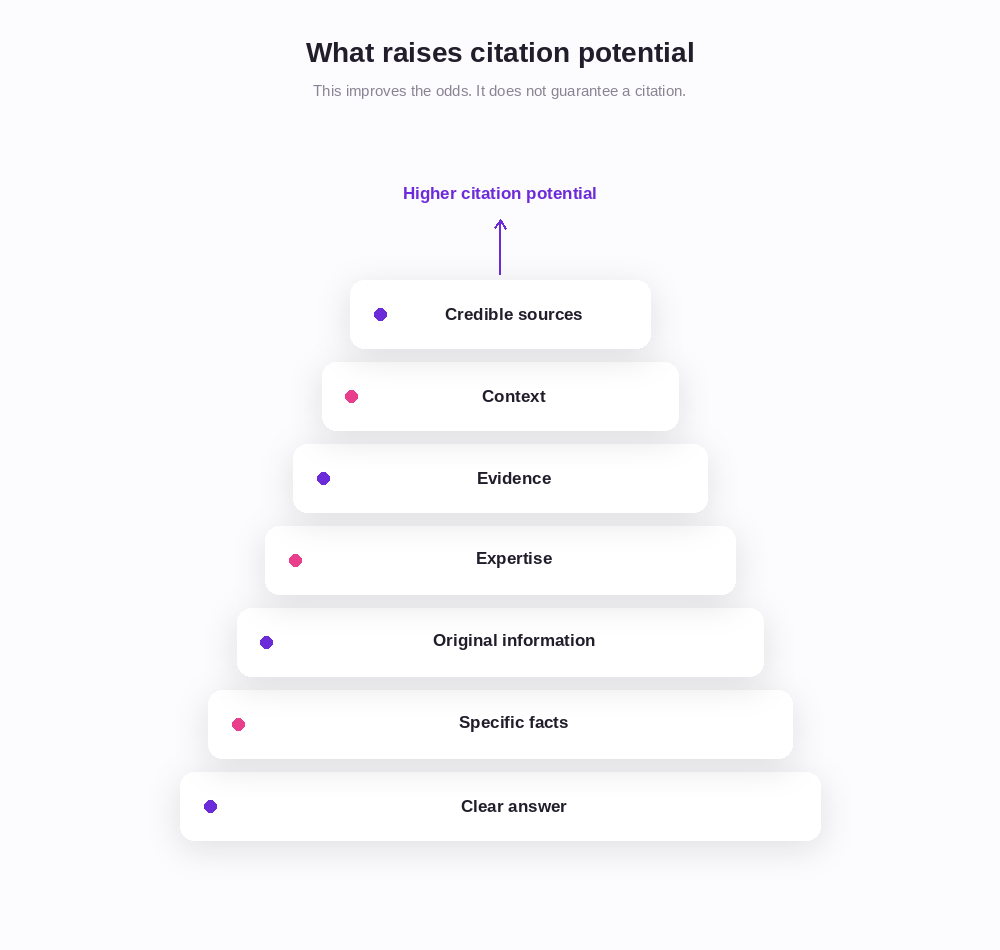
There’s no guaranteed method to force an AI system to cite a specific page. Anyone promising that is overselling the mechanics. What you can do is improve the conditions that make citation more likely. Those conditions tend to include clear, direct answers; strong supporting evidence; original information not easily found elsewhere; authoritative sourcing; specific, verifiable claims rather than vague ones; consistent brand and entity information across the web; useful context around the claim; and a credible third-party presence beyond your own site.
A D2C wellness brand that publishes a specific, sourced claim about a supplement’s use case backed by a named expert reviewer gives an AI system far more to work with than a page making broad, unattributed claims. This isn’t a hack to chase. It’s a byproduct of publishing genuinely useful, well-evidenced content consistently.
How to Optimize for Google AI Overviews
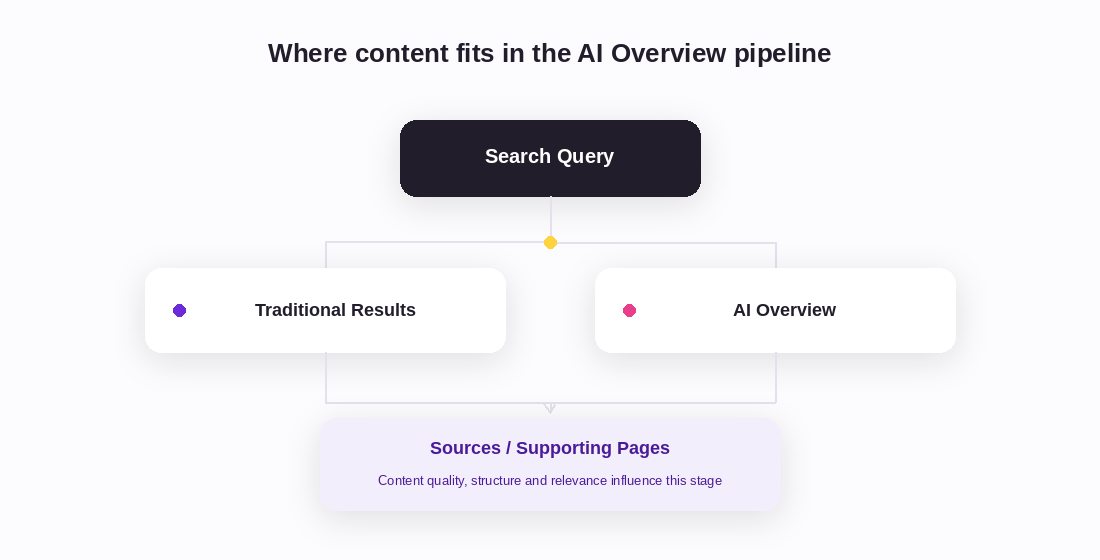
Don’t build a separate website or content track just for AI Overviews. Focus on the same fundamentals that support strong search visibility generally: clear search intent targeting, concise direct answers, topical depth, structured content, factual accuracy, original information, authority and technical accessibility.
Take the query “Can niacinamide be used with vitamin C?” A useful answer structure would open with a direct, evidence-based response yes, they can generally be combined, with a brief note on formulation considerations followed by supporting detail, and a mention of when a dermatologist consultation might be useful.
Following these fundamentals well improves the likelihood of being a useful source for an AI Overview. It does not guarantee inclusion, and that distinction matters when setting expectations internally.
How to Approach “Ranking” in ChatGPT and Other AI Search Tools
“How do I rank in ChatGPT” is a phrase marketers use constantly. It’s also slightly misleading. There’s no single ranked results page to climb, the way there is on Google. Depending on the platform, visibility can involve retrieval, relevance, authority signals, citation patterns, brand or entity recognition, and contextual fit to the specific prompt. Different AI platforms can produce noticeably different answers to similar questions.
A brand might appear in an AI-generated recommendation for one prompt phrasing but not for a slightly different one, because the context of the question changes what the system pulls in. This is exactly why chasing a single ranking position is the wrong mental model. Optimizing for genuine usefulness and authority holds up better across prompts than trying to manipulate one outcome.
GEO Content Strategy for 2026
A practical, repeatable framework for building a generative engine optimization strategy:
Step 1 — Map Customer Questions
Map real questions across the full journey awareness, consideration, comparison, purchase and post-purchase. A D2C skincare brand might map “what causes oily skin” at awareness, “which ingredients help oily skin” at consideration, and “how do I use this product correctly” at post-purchase.
Step 2 — Build Topic Clusters
Group related questions under pillar content, supported by focused sub-pages rather than isolated one-off posts.
Step 3 — Create Answer-Led Content
Structure each article so the direct answer appears early, with supporting depth and context following.
Step 4 — Add Original Expertise
Bring in expert input, first-party knowledge or original testing wherever the topic allows it.
Step 5 — Strengthen External Authority
Pursue credible third-party mentions, expert commentary and genuine reviews to build presence beyond the brand’s own site.
Step 6 — Refresh and Monitor
Review content on a regular cycle for outdated information, lost visibility, new customer questions, shifting AI search behavior and competitor coverage.
SEO vs GEO vs AI Search — What Should Your Team Actually Do?
| Area | Traditional SEO | GEO / AI Search Optimization | What Marketers Should Do |
|---|---|---|---|
| Primary objective | Rank pages on search results | Be understood and referenced in synthesized answers | Build content that works for both |
| User behaviour | Search, scan, click | Ask, read a synthesized answer | Write for the direct question first |
| Content focus | Keyword-targeted pages | Question-led, evidence-backed content | Combine keyword and question research |
| Search visibility | Ranking position | Mentions, citations, references | Track both, not just one |
| Authority | Backlinks, domain signals | Cross-web presence, expertise, evidence | Invest in genuine third-party coverage |
| Technical foundation | Crawlability, site speed, indexing | Same foundation, plus structured data | Keep technical SEO strong regardless |
| Measurement | Rankings, organic traffic | AI mentions, citation frequency (emerging) | Combine both metric sets |
| Content freshness | Periodic updates | More time-sensitive due to synthesis | Review high-intent pages more often |
| Main challenge | Competitive keyword difficulty | Limited, evolving measurement tools | Set realistic internal expectations |
| Recommended approach | Ongoing optimization | Extend SEO practices, don’t replace them | One integrated content system |
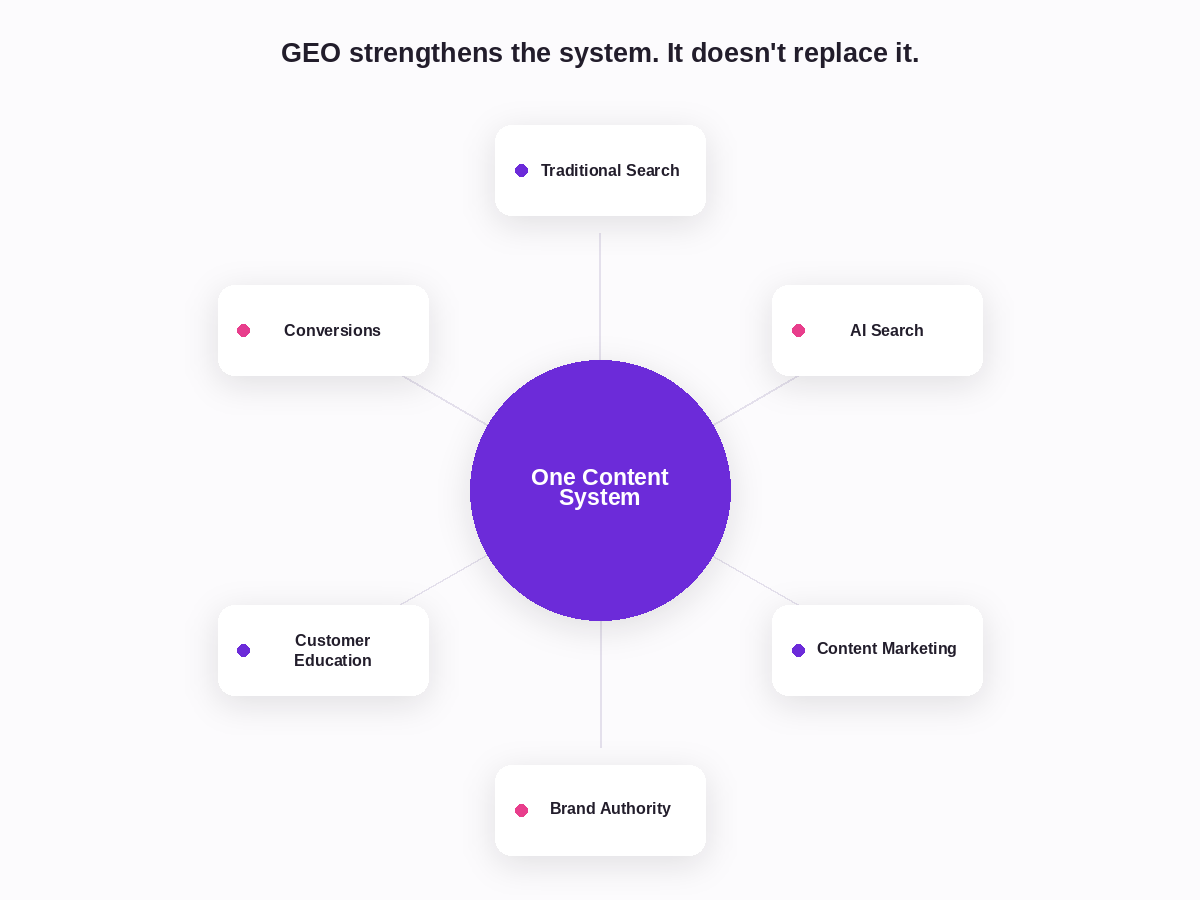
Don’t build three separate content strategies for SEO, GEO and AI search. Build one strong content system that supports traditional search and AI-driven discovery at the same time.
Advantages and Disadvantages of Optimizing for AI Search
Advantages
Greater visibility in emerging search experiences – A brand can potentially appear inside an AI-generated product recommendation instead of relying only on a traditional ranked listing.
Better alignment with conversational search – Content built around real questions can answer complex, multi-part queries that don’t map neatly to one keyword.
Stronger content quality overall- The discipline required for GEO sourcing, structure, expertise tends to raise the quality bar across a brand’s entire content library, not just the pages built for AI.
Opportunity for early movers– Brands that build strong, structured, evidence-backed content now may be better positioned as AI search matures. This won’t apply equally to every brand or category, and results will vary by competitive landscape.
Disadvantages and Challenges
Measurement is still developing– AI visibility is harder to track consistently than organic rankings, and standardized tools are still emerging.
No guaranteed citation– A brand cannot force an AI platform to mention it, regardless of how well-optimized the content is.
Platform behaviour changes quickly– AI search products and retrieval systems evolve fast, and what works today may shift with a model or product update.
Content requirements increase- Stronger expertise, evidence and information architecture take more time and resources to produce than a standard keyword-targeted blog post.
Results can vary by prompt– The same brand may appear for one query phrasing and not for a closely related one, which makes performance harder to predict.
How Should Indian D2C Brands Measure AI Search Visibility?
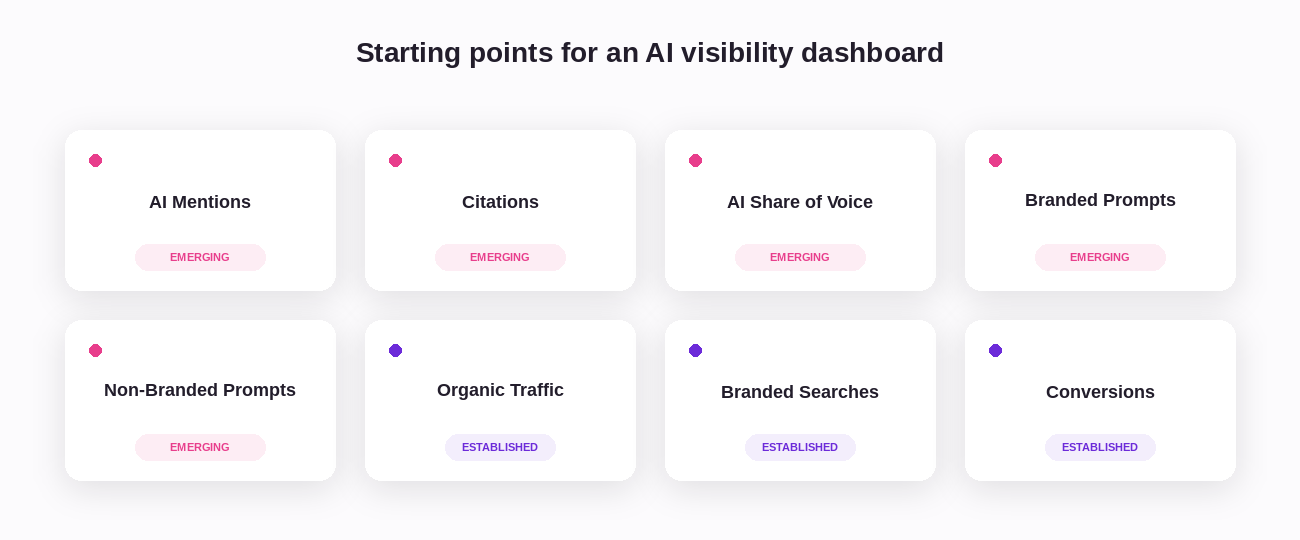
AI visibility metrics are still developing, and none of them is fully standardised across the industry yet. That said, several emerging signals are worth tracking: AI mentions, citation frequency, citation share, AI share of voice, performance on branded versus non-branded prompts, referral traffic where it’s measurable, organic traffic, conversions, assisted conversions and branded search volume.
The most useful approach combines these emerging AI signals with existing business metrics, rather than treating AI visibility as a standalone scoreboard. If a brand sees more AI mentions but no meaningful change in branded searches, qualified traffic or conversions, that’s worth investigating. Visibility that doesn’t move commercial outcomes may be reaching the wrong audience, or the AI mentions may not be translating into actual consideration.
Common GEO Mistakes Brands Should Avoid
Treating GEO as a replacement for SEO -A brand that pauses technical SEO work to “focus on GEO” usually loses ground on both fronts, since AI systems rely on the same crawled, indexed web.
Writing only for AI systems– Content stuffed with robotic, keyword-heavy phrasing to appeal to an algorithm tends to read poorly for humans, and AI systems are increasingly good at recognising low-quality writing.
Keyword-stuffing conversational questions– Forcing a target phrase into every question header, rather than writing the way a customer would actually ask it, undermines the natural-language advantage GEO is supposed to create.
Publishing generic AI-generated content with no review– A skincare brand publishing an unedited, ungrounded AI-written article risks factual errors that damage trust rather than building it.
Making unsupported claims- Broad, unattributed statements like “clinically proven” without a source attached create risk instead of authority.
Chasing citations instead of usefulness- Optimising purely to “get mentioned” without the content actually being useful tends to produce shallow, disconnected pages that underperform anyway.
Creating a separate GEO strategy disconnected from the existing content system– A standalone “AI content” workstream that doesn’t talk to the core SEO and content teams usually duplicates effort and produces inconsistent brand information across the web.
The 2026 Content Strategy: Create Content AI Can Understand and People Want to Trust
None of this is about pleasing an algorithm. It’s about building content that is genuinely useful, clear, authoritative, well-structured, evidence-backed, current and easy to understand. That overall good SEO, good content and effective GEO is really the same discipline, applied consistently. Brands that treat AI search optimisation as a bolt-on tactic will keep chasing a moving target. Brands that treat it as an extension of strong content and SEO fundamentals will be building something durable.
For Indian D2C and FMCG teams scaling direct channels in 2026, that means investing in one integrated content system, not three disconnected ones. This is the kind of connected strategy Social Pill helps brands build: SEO, content, social and digital authority working together, so AI visibility grows out of a strong existing foundation rather than a separate, isolated effort.
FAQs
- How do I optimize my content for AI search?
Focus on direct answers, clear structure, original information and verifiable claims, built on a strong existing SEO foundation. - How do I get my website cited by AI?
There’s no guaranteed method, but clear, evidence-backed, original content with consistent brand information improves citation potential. - How do I optimize for Google AI Overviews?
Strengthen the same fundamentals that support search visibility generally intent-matching, structure, accuracy and authority rather than building separate content. - How do I rank in ChatGPT?
“Ranking” isn’t the right framework; visibility depends on relevance, authority and context for each specific prompt, which can vary. - What is GEO in SEO?
GEO, or Generative Engine Optimisation, is the practice of making content easier for AI systems to understand, extract and reference. - Does SEO help with AI search?
Yes technical SEO, crawlability and content quality remain the foundation that AI visibility is built on. - Is GEO replacing SEO?
No. GEO extends practices rather than replacing them, and the two work best as one integrated system. - How long does GEO take to work?
There’s no fixed timeline, since it depends on content quality, competitive category and how AI platforms evolve treat it as an ongoing practice, not a one-time project.