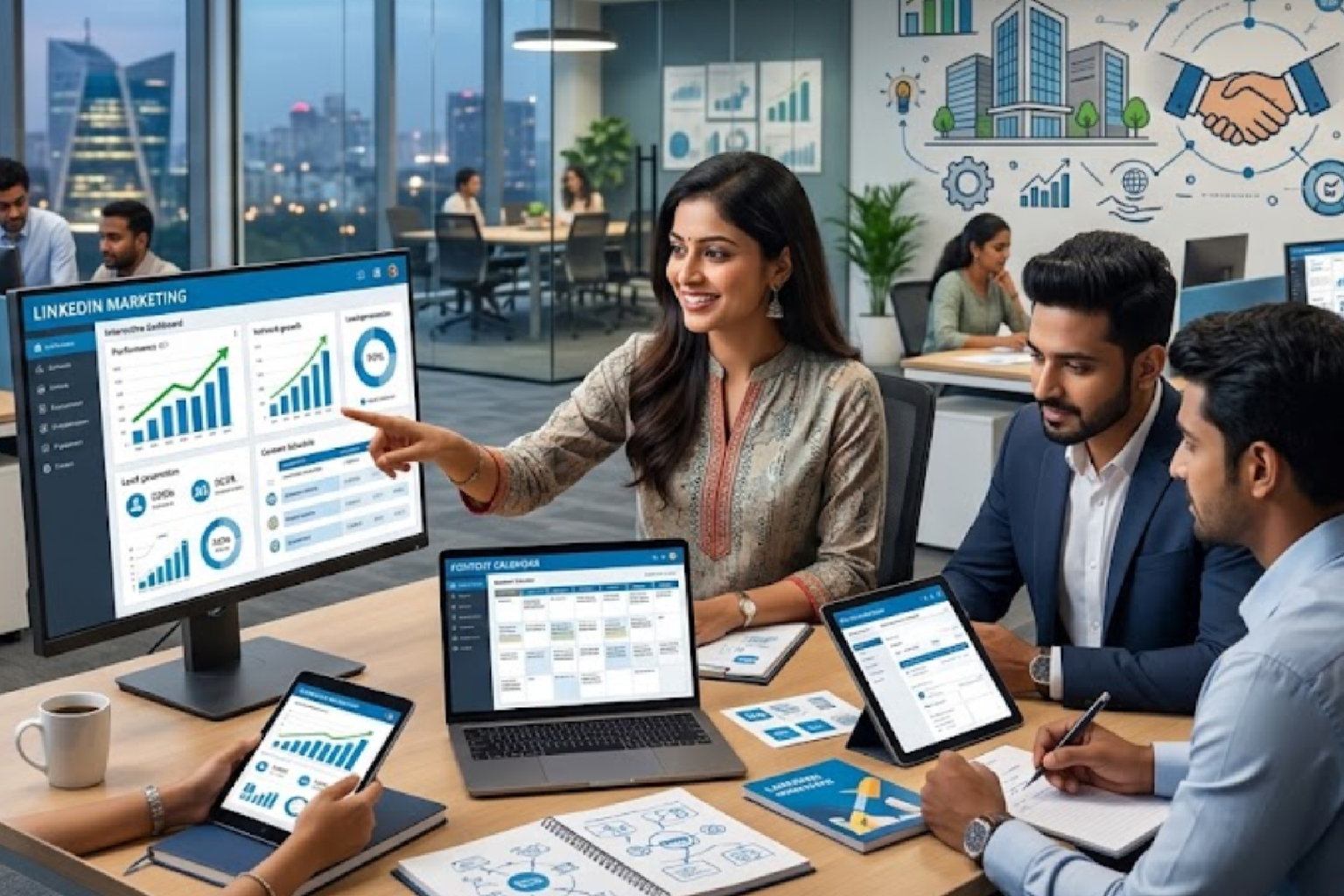
India now has over 130 million LinkedIn users, the second-largest user base on the planet. And yet, if you scroll through the LinkedIn pages of most Indian B2B brands, you’d think the platform was invented for press releases. Product launches, award announcements, generic industry updates posted into the void, collecting a handful of likes from colleagues, filed under “we’re active on LinkedIn.” The follower count ticks up.
The pipeline doesn’t move. That’s not a LinkedIn problem. That’s a strategy problem. LinkedIn marketing for B2B brands in India works but not with a playbook written for Silicon Valley. Decision-makers here trust differently, buy differently, and they see through content that wasn’t built with them in mind. This guide is for the CMOs and founders who are done treating LinkedIn like a bulletin board.
Why LinkedIn Marketing for B2B Brands in India Is the Most Unfair Advantage You Are Not Using
LinkedIn marketing for B2B brands in India puts you in front of a CFO in Pune, a procurement head in Ahmedabad, and a CTO in Bengaluru simultaneously, without paying for a trade show booth. A trade show costs two to three lakhs minimum and you’re competing with forty other booths for attention. Cold email? You’re lucky if 8% of them open it. LinkedIn reaches all three decision-makers at the cost of a well-written post, and it reaches them when they’re already in professional mode not scrolling through memes or dodging ads.
The Indian B2B buying cycle is long, relational, and involves more stakeholders than most Western sales frameworks account for. A deal that closes in three weeks in the US can take six months here, because it’s not just the primary contact you need to convince it’s their team, their boss, sometimes their boss’s boss. LinkedIn is the only channel where you can run parallel conversations with all of them through content, without anyone knowing. Zoho figured this out early; their content has always spoken to multiple stakeholder types within the same target accounts, which is a big reason they command authority against global competitors with ten times the budget.
Social Pill on Getting LinkedIn Marketing for B2B Brands in India Right Starting With the Basics Most Brands Skip
The first thing most brands get wrong about LinkedIn marketing for B2B brands in India is where they put their effort and it’s almost always the company page. Your company page matters, but it’s not where relationships get built. People connect with people. The most effective LinkedIn presence in Indian B2B treats the company page as a credibility anchor and invests the real work into two or three senior people who post consistently from their personal profiles. That’s the Razorpay model when they want to shift market perception, its founders and senior leaders writing with a genuine point of view, and the company page amplifying it.
The profile infrastructure piece is unglamorous but non-negotiable. Every person posting on behalf of your brand needs a headline that speaks to a buyer’s problem, not their job title. “VP Sales at ABC Technologies” communicates nothing. “Helping mid-size Indian exporters reduce their cost-to-ship by 25%” tells them exactly why they should pay attention. Cadence matters just as much, three posts per week per spokesperson works best: one thought leadership piece, one India-market insight, and one post designed to spark a conversation. The goal in the first 90 days isn’t to go viral. It’s to become the name a specific buyer thinks of when their problem gets painful enough to act on.
Social Pill on How LinkedIn Marketing for B2B Brands in India Builds Pipeline When Content and Sales Work Together
The most expensive mistake in LinkedIn marketing for B2B brands in India is treating the platform like a vending machine: put content in, get leads out. When leads don’t pop out immediately, brands declare it broken and move on. But LinkedIn pipeline isn’t built through passive broadcasting. It’s built through content plus warm outreach plus trigger-based engagement treating every like, comment, and new follower as a buying signal and actually doing something with it. In most Indian B2B companies, those signals are completely invisible because no one’s watching for them.
Darwinbox handles this well. When a target account’s HR director engages with one of their LinkedIn posts, that signal surfaces to the relevant sales rep within 24 hours. The rep then reaches out not with a pitch, but with a follow-up on the thought the prospect already showed interest in. The pipeline brands aren’t just posting better content. They’ve closed the loop between content and sales, and that loop is what most Indian B2B marketing teams haven’t built yet. For brands where outbound is still the primary engine, LinkedIn Sales Navigator lets you filter by company size, seniority, geography, and growth signals within the Indian market and build a prospect list in an afternoon that would have taken months manually.
Social Pill on Why LinkedIn Marketing for B2B Brands in India Requires a Different Playbook Than What Most Guides Teach
What separates effective LinkedIn marketing for B2B brands in India from generic global advice is regional specificity and most guides completely miss it. A brand that acknowledges the particular pressure a manufacturer in Coimbatore is under, or the cash-flow reality facing a logistics operator in Surat, will always outperform one speaking in broad pan-India generalities. OfBusiness built its LinkedIn presence on exactly this hyper-specific content about the industries and geographies they serve, in the language their buyers actually use.
Numbers and proof aren’t optional they’re the price of credibility. Indian buyers discount claims they can’t verify, so every assertion needs a specific outcome behind it. Not “we help companies grow faster” but “we helped a textile exporter in Tirupur cut working capital requirements by 22% in four months.” And don’t overlook strategic commenting a genuinely insightful comment on a target account decision-maker’s post gets seen by thousands of people in your exact industry. LeadSquared has done this deliberately for years, putting senior voices in front of qualified buyers without spending a rupee on ads.
Social Pill on Why Most LinkedIn Marketing for B2B Brands in India Fails for the Same Avoidable Reasons
The most common failure in LinkedIn marketing for B2B brands in India is mistaking motion for strategy. Brands that have tried LinkedIn and walked away frustrated almost always fell into the same pattern: sporadic posting with no clear buyer in mind and no system for turning engagement into actual conversations. A product announcement on Monday, an award repost on Wednesday, a generic industry article on Friday that’s not a LinkedIn strategy. Every post should answer one question: is this genuinely useful to the specific person I’m trying to reach?
The second mistake is playing it safe. Indian corporate culture tends toward polish and formality online, and the result is LinkedIn content that looks professional, says nothing, and gets scrolled past in half a second. Chargebee’s early LinkedIn growth was built almost entirely on candid founder content that pushed back on conventional SaaS wisdom. People shared it because it was honest and that level of honesty is still rare enough on Indian LinkedIn to be remarkable. The third mistake is ignoring the comment section entirely. When someone comments on your content, they’re raising their hand. Responding, asking follow-up questions, turning threads into conversations that’s how a LinkedIn audience becomes a warm audience, and warm audiences are where pipeline comes from.
Social Pill on Why LinkedIn Marketing for B2B Brands in India Should Be Keeping Clients Not Just Winning Them
Here’s what almost no guide on LinkedIn marketing for B2B brands in India covers and it’s one of the highest-ROI applications of the platform. The entire LinkedIn conversation in B2B is framed around acquisition. But in a market where client relationships run long, referrals drive significant new business, and competitor poaching is a constant threat, LinkedIn is one of the most underused retention tools available. When your existing clients see your content regularly your thinking, your team’s wins, your takes on their industry you don’t just stay front of mind. You stay valuable. That’s what prevents the quiet drift that leads to churn.
Your client-facing team should follow every key stakeholder at your top 20 accounts and engage with their content genuinely. Capillary Technologies does this deliberately their customer success teams use LinkedIn engagement as a relationship maintenance tool, not just a sales prospecting one. The second layer is celebrating clients publicly: a post framing a client’s business win as a case study does three things at once it makes the client feel valued, gives their leadership something to share internally, and shows prospects what a successful engagement with your brand looks like in real Indian numbers. That’s content that earns inbound while protecting the revenue you already have.
Social Pill on What Your First 90 Days of LinkedIn Marketing for B2B Brands in India Should Look Like
Getting LinkedIn marketing for B2B brands in India right doesn’t require a six-month runway it requires a focused two weeks of setup and 90 days of disciplined execution. In those first two weeks: optimise profiles for two or three senior spokespeople, lock in a specific buyer persona, build a content bank of 12 to 15 posts, and define what success looks like in measurable terms before you start. Weeks three through eight are about consistency three posts per week per spokesperson, daily engagement with target accounts, every comment replied to within 24 hours. Don’t chase virality. Chase being consistently useful to a narrow audience of high-intent buyers.
From week nine to the end of month three, bring in the outbound layer. Pull your engagement data, build a warm outreach list, and have your sales team start conversations grounded in content the prospect already engaged with not a pitch. At the 90-day mark, do a proper review: which formats drove the most engagement, which posts generated profile visits, which conversations became meetings. Write your next plan from that data. The difference between plan one and plan two is the difference between guessing and knowing.
How Social Pill Helps B2B Brands Win With LinkedIn Marketing for B2B Brands in India
Running LinkedIn marketing for B2B brands in India that actually builds pipeline is harder than it looks. It requires content, outbound, and retention working together not separately. A LinkedIn strategy that moves the needle needs all three aligned and executed consistently, week after week. Social Pill works with B2B brands in India at exactly this intersection.
Social Pill helps brands build real authority on LinkedIn, convert post engagement into pipeline conversations, and turn cold prospects into clients who already trust you before the first call. Whether you are starting from zero or trying to fix a LinkedIn presence that is generating followers but not revenue, Social Pill brings the structure, strategy, and execution your brand needs to grow without guessing.
If you want to stop posting into the void and start running LinkedIn marketing for B2B brands in India that actually works, talk to Social Pill.