Many patients now look at reviews, doctor profiles and short videos before deciding where to get care. Healthcare social media marketing uses media platforms to teach patients create trust and get more appointment requests. It helps patients make choices. Does not take the place of actual medical care. This guide covers strategy, choosing the right platforms, planning content, following rules, and measuring results. It also includes the National Medical Commission (NMC) advertising guidelines, from October 6 2026 which change what Indian hospitals and doctors are allowed to post.
What Is Healthcare Social Media Marketing?
Healthcare social media marketing is when hospitals, clinics and other medical providers use media platforms to share useful information with patients build trust and help reach goals like getting more questions or booking appointments. They do this while following rules about healthcare, advertising and patient privacy. This kind of marketing helps hospitals, clinics, diagnostic centres, healthcare groups, wellness providers and healthcare brands. The important things are giving correct information and earning patient trust. Promotion is not the focus. It comes after that. In India this area is closely. Has strict rules.
Social media and healthcare marketing are related,. Social media is just one part of a bigger picture. That bigger picture includes marketing tools like search engine optimization and your website. Good healthcare social media marketing works, with these other tools. It doesn’t compete with them. It supports them.
Why Is Social Media Important for Healthcare Brands?
Social media is where many people first come across a hospital’s doctors, services and community efforts. When used in the way healthcare social media marketing allows providers to build trust respond to questions and show up when patients search locally.. It is never the only thing that influences a patient’s choice.
Patients research online before they choose
Reviews, doctor profiles and educational videos all help a patient make a decision. Other factors include referrals, where the doctor is located and how much it costs. In a 2026 study of 130 caregivers at one hospital in Bengaluru 58 percent said social media had an effect on the doctor they chose. The group was small so think of this as a sign, not a number that shows what everyone across the country thinks. The main idea is clear: make sure that what people see about you online is correct up, to date and something they can use away.
It builds trust and helps address misinformation
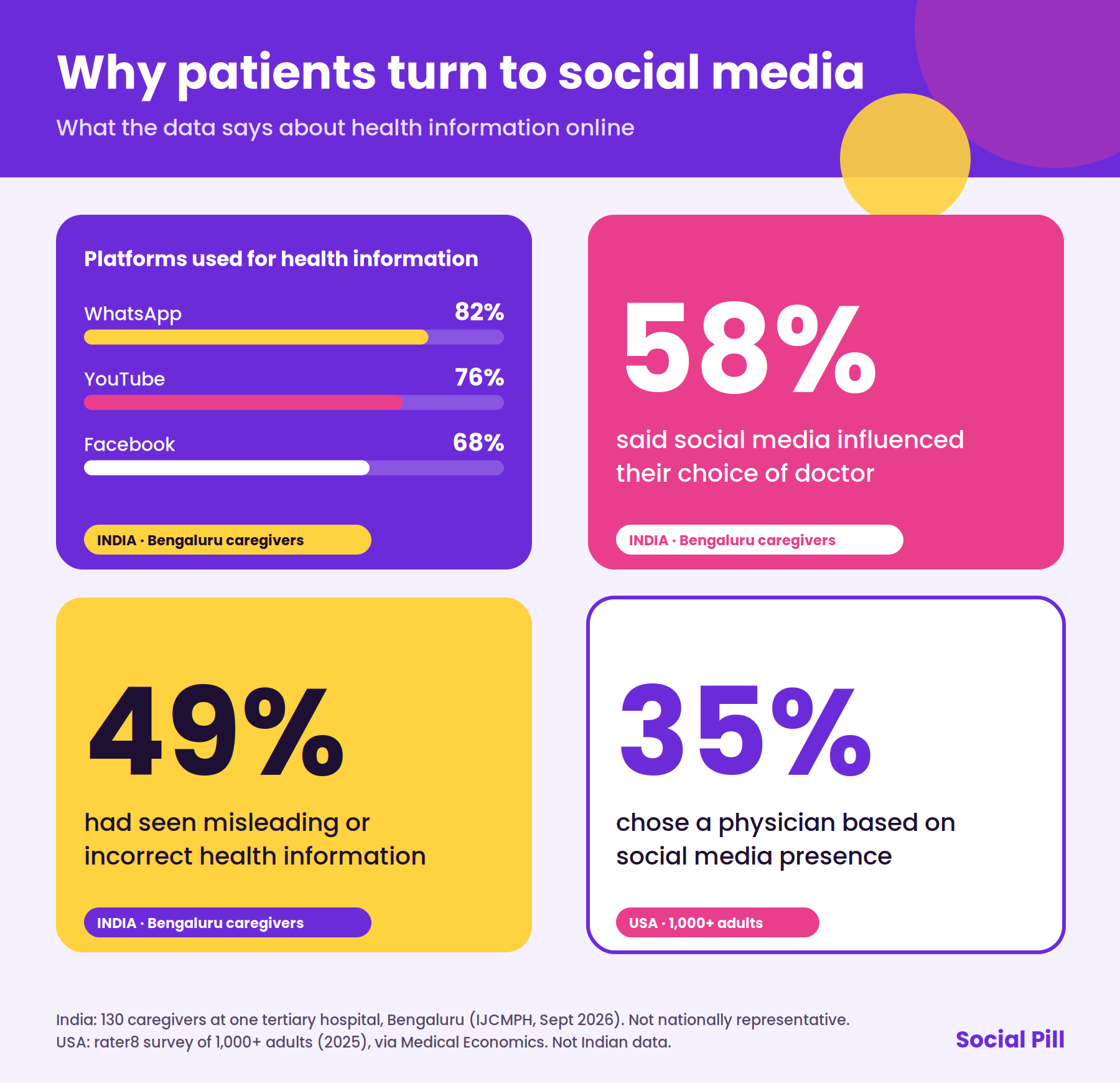
People come across a lot of health info online. In the study 49% of the people surveyed said they saw misleading or wrong health information. Trusted doctors and nurses can help by sharing true posts that fix common myths. For example a short post explaining a home remedy can go a long way. This won’t stop all misinformation. When your hospital keeps sharing honest clear facts people start to trust you more. Over time your hospital becomes a place people turn to when they need health advice.
It supports patient engagement and recruitment
Public channels are good for things like questions health updates, community events and job openings. A hospital can use LinkedIn to share news about a screening camp answer questions about visiting hours or post nursing job openings. Keep these kinds of posts from private medical talks. Things, like symptoms, test results and treatment advice should not go in the comments. Those need to be shared through a secure channel. It’s important to protect information and keep personal health details private.
It improves local visibility and appointment discovery
People often search for care in their area so having consistent profile details is important. Make sure to use the name, address and phone number on all your social media accounts. Add location tags to your posts. Include a clear booking link in every bio. Sharing content also boosts your visibility in searches. Our guide, on how media and SEO work together shows how captions and profiles help people find you.
It helps healthcare brands understand audience needs
Comments, saves, shares and repeated questions tell us what people are interested in. If a lot of followers ask about how to prepare for an MRI then making a video about it could be helpful. Check what is being asked across posts instead of looking at one comment at a time. Always keep health information that someone shares with you confidential even if it makes you think of an idea, for a post.
Which Social Media Platforms Are Best for Healthcare Marketing?
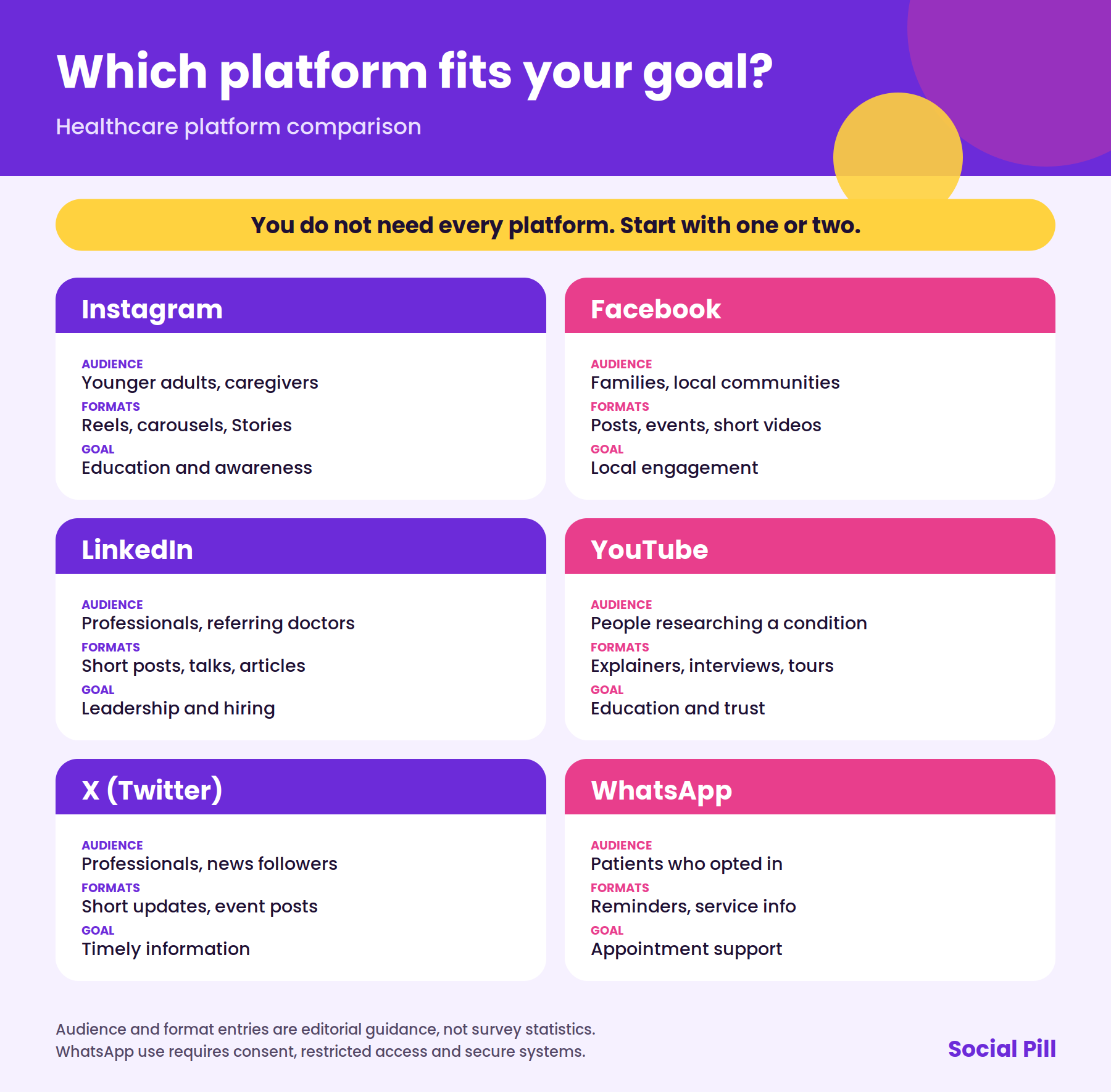
The right platform depends on your audience, goal, team capacity and type of organisation. You do not need every platform. A social media marketing agency in Mumbai or your in-house team can start with one or two and add more later.
Instagram and Facebook
Both. Facebook fit patient education, short videos, community updates and factual service information. Instagram works well for Reels and carousels and Instagram is perfect for visual posts. Facebook is useful for events, local groups and updates for families and Facebook keeps families connected. For example a diagnostic centre can post a 30‑second Reel on preparing for a fasting blood test with a booking link in its bio. This is a starting pair, for most hospital and clinic social media marketing.
LinkedIn is good for leadership visibility and professional networking and hiring and B2B communication. It is a place for hospitals to send factual updates to referring doctors for example about new equipment, new departments or about clinical talks. Hospitals can also use LinkedIn to attract nurses, technicians and administrators. We must never share patient information and we should keep clinicians’ posts educational rather, than self‑promotional.
YouTube
Long videos are good at answering questions in detail. Explaining procedures interviewing doctors walking through a facility and talking about care all help and these videos stay relevant for a long time because people look for them. A qualified clinician must check every video before it is posted. First write down the five common questions that patients ask and make a plan for one video, for each question.
X (formerly Twitter) and WhatsApp
X works well for X updates and X discussion when X audience is active for example X health advisories or X event announcements. WhatsApp feels more private. Is suitable, for X appointment reminders X opt‑in updates and X service information. Get consent, limit who can access the X account and use X secure systems. Do not broadcast X health information or run X clinical consultations on casual chats.
How Do You Create a Healthcare Social Media Strategy?
A healthcare social media strategy connects business goals, patient needs, content planning, professional review and performance tracking. Four steps build it.
Step 1 — Set measurable goals
A goal is a result that has a number and a deadline. Here is an example that does not promise a result: “Increase appointment‑click traffic from Instagram by 20 percent in one quarter.” Choose one or two goals, such as awareness, website visits, enquiries or hiring of trying to do everything at once. Our guide on using media to drive website traffic can help you plan the traffic side. This week write down your monthly bio‑link clicks, as a baseline.
Step 2 — Define your audience
Different people need different content, so a single message rarely works for everyone. Three simple personas help you plan: a patient, a caregiver and a referring doctor. Each asks different questions and trusts different content. This week, plan one post answering each persona’s top question.
- Patient: a Pune professional searching for persistent back pain and wondering which specialist to see.
- Caregiver: a Thane resident comparing cardiac hospitals for his father, asking about visiting hours and costs.
- Referring doctor: a Nashik family physician who wants clear information on a hospital’s oncology specialists.
Step 3 — Choose platforms and content pillars
Pillars are the repeating themes of your content, and they keep your calendar balanced. Use four, and match each to a practical example. Our content marketing strategy guide explains how to plan themes like these. This week, tag your last ten posts by pillar and spot the gaps.
- Education: myth-busting and preventive care, such as a clinician-reviewed monsoon health guide.
- Trust: doctors explaining how a procedure works.
- Community: screening camps and awareness days.
- Promotion: factual details of services, facilities and timings.
Step 4 — Build a posting workflow with approvals
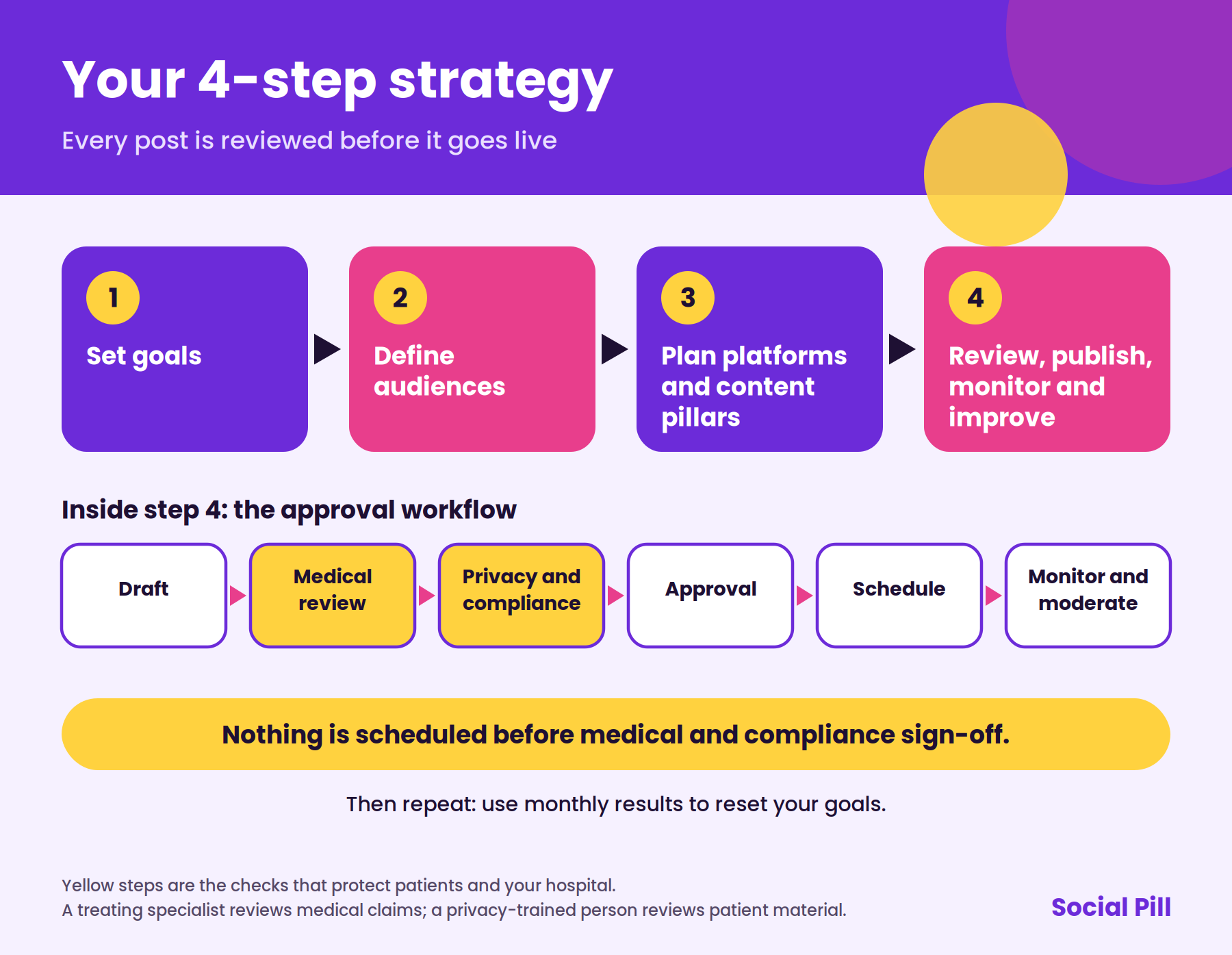
A workflow is the path every post follows. Every post begins with a draft moves to medical review then to privacy and compliance check then to approval then to scheduling and finally to monitoring and moderation. A treating specialist should check claims and a privacy specialist should check patient‑related material. Write a social media policy and an escalation route for clinical questions and complaints. A healthcare digital marketing agency in India can run this process, but your clinicians must still approve the medicine. This week, name an owner for each step.
How often should you post?
No single frequency works for every provider. Most benchmarks cover all industries, not healthcare. A 2026 Buffer roundup found that two to five posts per week is the effective range, for brands overall. Start with three posts each week as a test. Then make changes after eight to twelve weeks based on results. Consistency matters. Quality matters. Safe review matters. More volume does not mean results.
What Should Healthcare Brands Post on Social Media?
Healthcare content that is useful teaches people helps them feel more sure about things answers questions that many people have and makes it simpler to understand the services available. The best way to market healthcare, on media uses different types of content instead of using the same one over and over again.
Educational content
Myth-busting, symptom awareness, preventive care and seasonal topics all work well. Keep the content general. Never encourage self-diagnosis. Never suggest that a post replaces a doctor’s advice. For example a hospital can share a clinician-reviewed dengue prevention guide during the monsoon ending with guidance on when to see a doctor. This week ask one specialist for their three myths.
Doctor-led short videos
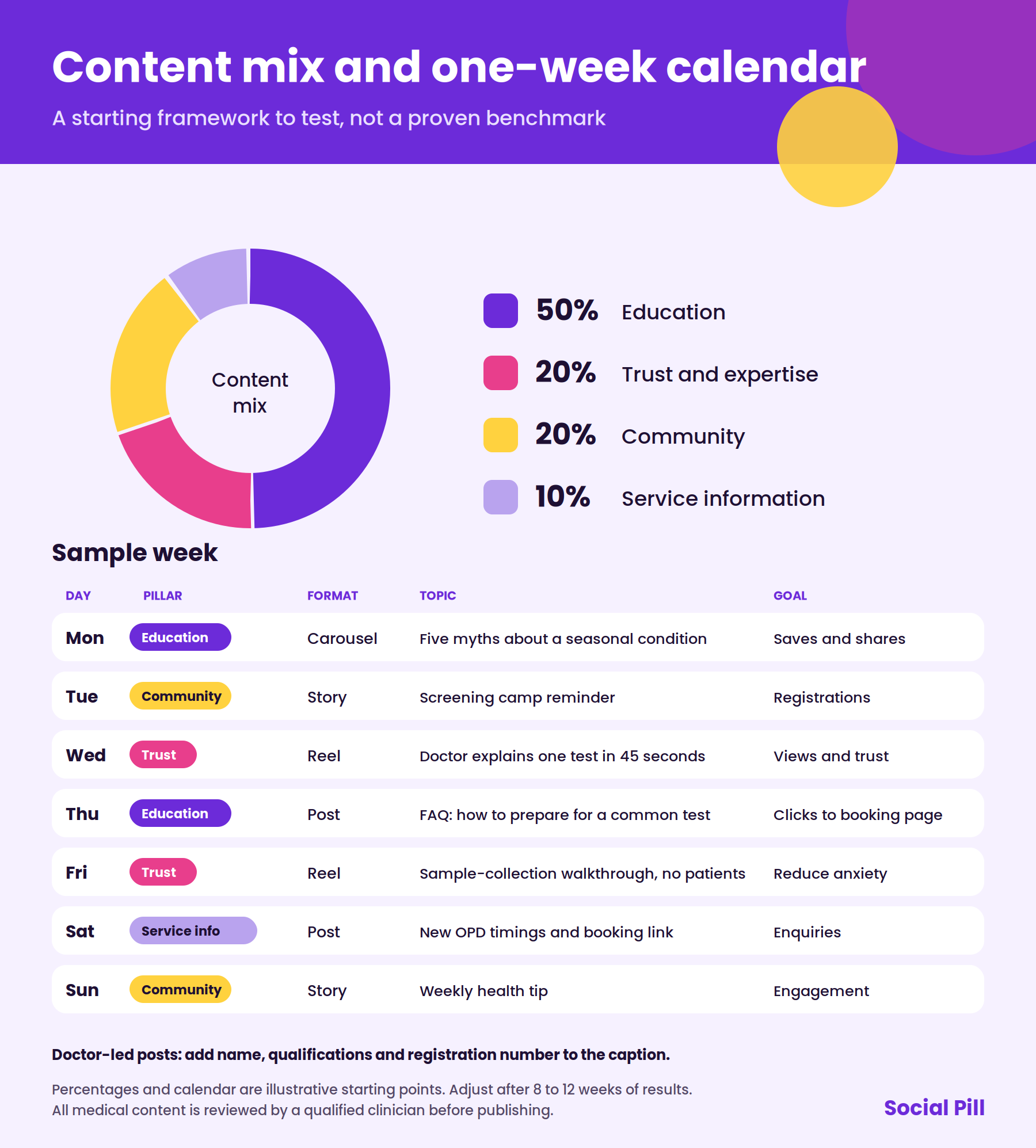
Reels and Shorts can hold one idea in 30 to 60 seconds. Think of that as a guide, not a rule. Use words. Make sure captions and subtitles are clear and correct. End each video with one takeaway. Under the NMC’s 2026 guidelines doctors must include their name, qualifications and registration number in their posts. Add these details to the caption. This week film a 45-second explainer with a specialist.
Patient stories and testimonials
These are the places where the rules have changed the most. According to the NMCs October 2026 guidelines registered doctors must not ask for. Share patient testimonials for promotion, on social media. Hospitals must not ask for buy or manipulate reviews and having consent does not allow a promotional patient story. Check the compliance section. Safer options are to explain the care process and post doctor‑reviewed education. This week I suggest you have your legal adviser look over testimonial posts. The rules still require review.
Behind-the-scenes and team content
I think staff introductions, facility tours and equipment explainers show how care works and make the hospital feel approachable. I suggest keeping hospital posts about doctors factual rather than promotional. List the doctors name, qualification and department. Before publishing check every frame for faces, records, screens and overheard conversations. This week plan a tour of a day-care or sample-collection area, at the hospital.
FAQs, service explainers and appointment guidance
I recommend that posts, about visiting hours booking steps, test preparation and follow-up reduce confusion and save desk time. Keep posts administrative and general not medical advice. Posts are often. Shared, which helps more people find them. This week turn five common front desk questions into a carousel.
Community health campaigns and awareness days
Screening camps, vaccination information and health awareness days can support education. Share posts when you have useful information not just to fill the calendar. Avoid offers or discounts that could lead to tests because the NMC guidelines warn against that. This week choose one awareness day in the quarter and arrange a doctor‑led Q&A.
Use a starting framework, for testing: fifty percent education, twenty percent trust and expertise twenty percent community and ten percent service information. These percentages are examples, not a proven benchmark.
Is Healthcare Social Media Marketing Safe? Compliance and Risk Basics
Healthcare social media marketing involves personal information, medical claims, advertising limits and public comments. Handle each carefully.
Patient privacy rules — HIPAA and Indian requirements
HIPAA is a US law and does not automatically apply to Indian hospitals and clinics. In India, the Digital Personal Data Protection (DPDP) Act, 2023 is the main framework. The government notified the DPDP Rules in November 2025 with an 18-month phased timeline, so most business duties, including consent notices, fall due by 13 May 2027.
Practical do’s and don’ts:
- Get specific, documented consent where required before using identifiable patient photos, videos or details. Consent does not override other legal or professional limits.
- Never reveal names, records, diagnoses or appointment details without a lawful basis.
- Check backgrounds, screens, documents, tags and location details before posting.
- Do not diagnose or give individual treatment advice in comments or informal DMs. Move sensitive discussions to a private, secure channel.
- Limit access to social accounts and patient material.
Claims and advertising rules
The NMC’s guidelines of 6 October 2026 cover hospitals, medical institutions and registered doctors across social media, websites, messaging apps, influencer posts and AI-generated promotion. Hospitals may share factual details such as facilities, equipment, departments, accreditation and charges. They must avoid guaranteed outcomes, unverifiable superiority claims such as “best” and fake or paid reviews. Doctors face stricter limits on self-promotion. Using an agency or influencer does not shift responsibility, and agency fees cannot be tied to patient referrals. Separately, ASCI has flagged hospital ads making unsubstantiated “best” claims.
How do you handle negative comments?
Public criticism is part of being on social media, and how you respond is visible to everyone. Follow three steps, and escalate to the clinical, administrative or legal team when needed.
- Respond promptly and politely.
- Move patient-specific matters to a private channel.
- Never disclose or confirm confidential patient information publicly.
This section provides general information, not legal advice. Healthcare organisations should verify the rules applicable to their services and seek qualified legal guidance where needed.
How Do You Measure Healthcare Social Media ROI?
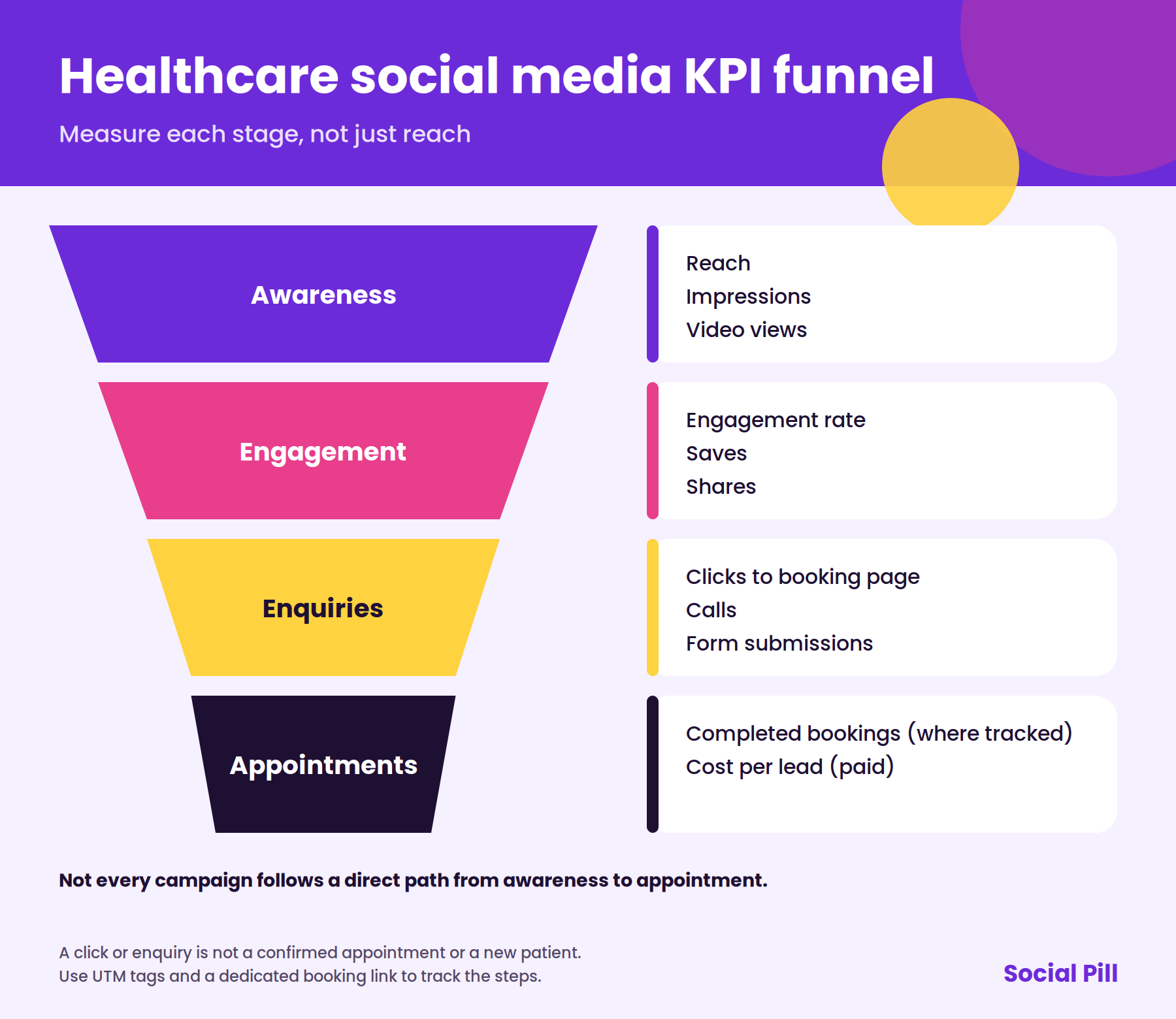
Follower growth and reach alone do not show business value. Measure whether healthcare social media marketing supports actions such as website visits, enquiries, appointment requests and your agreed goals.
Metrics that matter
Choose metrics that match each campaign’s goal, and keep the list short. These are the ones most teams need:
- Engagement rate: the share of viewers who interact with a post.
- Saves and shares: signs the content was worth keeping or passing on.
- Relevant link clicks: clicks to booking or service pages.
- Enquiries, calls and form submissions: people who took a step.
- Completed bookings: where tracking is available.
- Cost per lead: ad spend divided by enquiries, for paid campaigns.
A click or enquiry is not a confirmed appointment or a new patient, so read these numbers as steps in a journey.
Tracking tips
Good tracking is mostly set-up work done once and checked monthly. Follow these steps:
- Add UTM tags to campaign links.
- Use a dedicated booking or enquiry link where practical.
- Use call tracking only with consent and privacy safeguards.
- Configure website analytics and conversion tracking properly.
- Report monthly against your original goal.
Not every campaign follows a clean path from awareness to appointment, so use the data to improve content and the booking page. Check with legal counsel before linking agency fees to leads or bookings.
How Social Pill as an Agency Helps with Healthcare Social Media Marketing?
Social Pill is a marketing agency based in Mumbai. They help brands create content handle media build a stronger online presence and measure results. When it comes to healthcare social media marketing this can include a content schedule, managing online communities improving search visibility and providing monthly reports based on set goals. Social Pill works with your clinical teams and compliance teams, who are in charge of medical checks and approvals. If you want to learn more, about how this can benefit your brand reach out to Social Pill.
Conclusion
Effective healthcare social media marketing depends on accurate information, patient trust, consistent content, privacy-conscious communication and measurable goals. Start with a clear audience, a manageable content plan and a review process before increasing volume. Judge results by engagement and business outcomes, not follower counts. Rules also change, as they did this October, so review your approach regularly. If you would like a partner for this, talk to Social Pill.
FAQs
- Which social media platform is best for healthcare?
It depends on your audience and goal. Instagram and Facebook suit patient education and local reach, LinkedIn suits hiring and professional visibility, and YouTube suits searchable explainers. Most providers do better starting with one or two platforms they can manage well. Review results after a few months before adding another. - How often should a hospital post on social media?
No universal benchmark exists. As a guideline to test, start with three posts a week on your main platform. Consistency, quality and safe medical review matter more than volume. Adjust after eight to twelve weeks based on engagement, enquiries and what your team can review safely. - Can healthcare providers share patient testimonials?
Under the NMC’s October 2026 guidelines, doctors must not request or share them for promotion on social media. Hospitals must not solicit, buy or manipulate reviews, and consent alone does not make a promotional story acceptable. Treat testimonials as high-risk, and take legal advice before using any patient material. - How much does healthcare social media marketing cost?
Cost depends on the number of platforms, content volume, video production, medical review, community management, paid advertising and reporting. There is no fixed industry price. Ask agencies for a quotation based on your scope, and check with legal counsel before tying fees to patient numbers. - Do small clinics need social media marketing?
It can help if kept simple. A clinic can share useful information, build local awareness, answer common administrative questions and point people to booking channels. One or two suitable platforms are a practical start, and the same advertising and privacy rules apply as for larger providers.